Porsche

1971 Porsche 917 Kurzheck Coupé

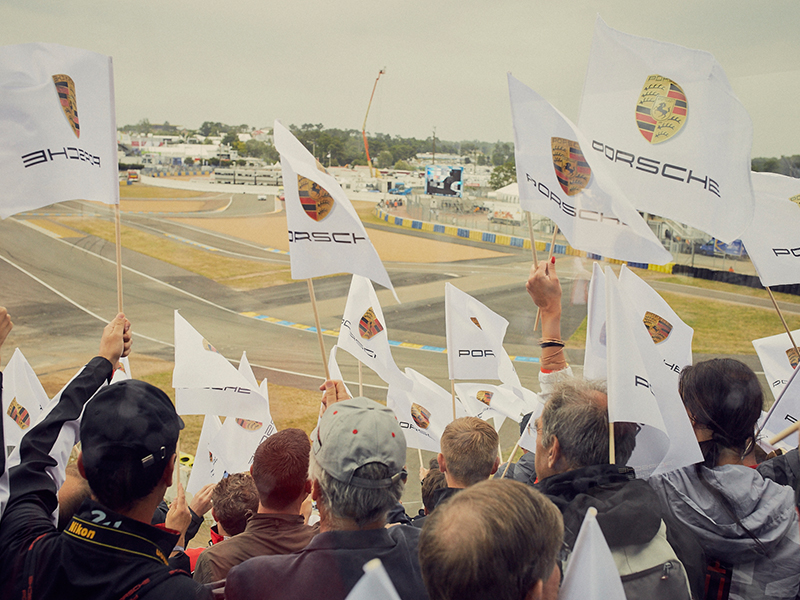
In 1970, the 917 not only earned Porsche its first overall victory at the Le Mans 24 hours race, but also the World Constructors' Championships. 1971 saw the first "rolling" start in Le Mans and the level of Porsche participation in the race was greater than ever before. Of a total of 49 vehicles at the start, 33 came from Porsche. The technology first tested in Monza was now to lead to success for the short-tailed 917 entered in Le Mans, complete with "shark fins" on the rear. However, one of these short-tailed 917s with fins concealed an additional secret under its white plastic panelling. In place of the tried and tested aluminium tubular space frame, the number 22 had a frame made of magnesium, which is a third lighter than aluminium.

Lightened to such an extent, the magnesium Porsche amazed everyone with its astonishing driving performance and advanced to a personal favourite. Even if it looked like a victory for the long-tailed 917 from the outset, the initial restraint exercised by the driving team of van Lennep/Dr. Marko in the ultra-light 917-053 bearing the number 22 was relinquished fully in the second half of the race. In the thirteenth hour the team took over the lead. When it crossed the finishing line on Sunday afternoon at 16.00, it had increased its lead to two laps ahead of the next Porsche 917 and 31 laps ahead of the first Ferrari in 3rd place. Over 24 hours it drove a total of 5,335.16 kilometres - the absolute course record for Le Mans at that time. The average speed was 222.30 km/h.

Technical Specifications
Engine: Twelve-cylinder twin-valve induction engine (Boxer), air-cooled, four overhead camshafts with timing gear
Power: 600 PS at 8.400 RPM
Displacement: 4.907 cc
Fuel system: Mechanical fuel-injection system
Transmission: Five-speed gearbox, locking differential
Chassis: Magnesium-tubular space frame with plastic body, independent wheel suspension, coil springs, internally ventilated disc brakes
Dimensions and weight: Wheel base 2.300 mm
width 1.975 mm
weight 885 kg
Performance: Top speed approx. 360 km/h
Chassis No. of the museum car: 917 053