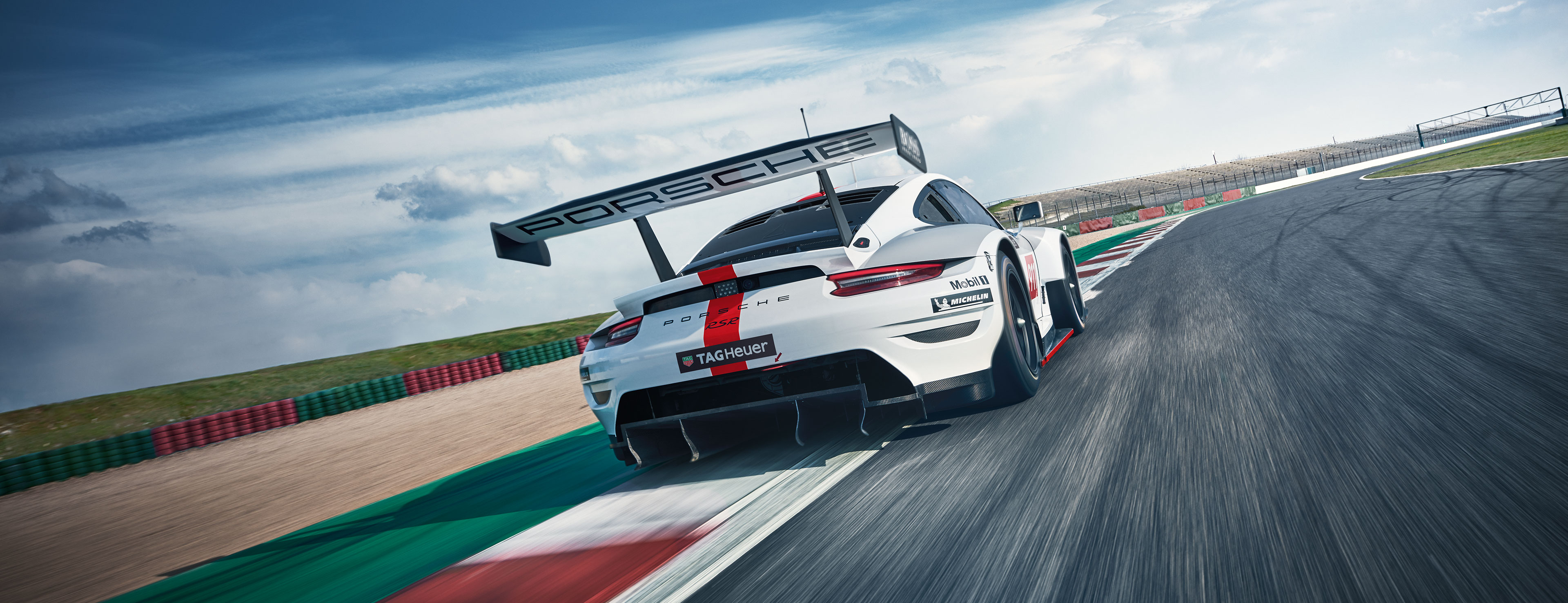
Protecting the environment in the most direct and efficient way.
Alongside outstanding driving dynamics, safety and quality, one of the key objectives in our vehicle development process is environmental compatibility. At Porsche, the responsible use of raw materials has always been high on our list of specifications for each and every model.
It is also a critical factor in terms of ensuring that our cars continue to secure racing victories. Today, companies have to be able to manage their resources carefully in order to achieve long-term success. Porsche engineers are continually developing the lightweight construction, reducing fuel consumption by making engines more efficient and, at the same time, meeting strict emissions standards.
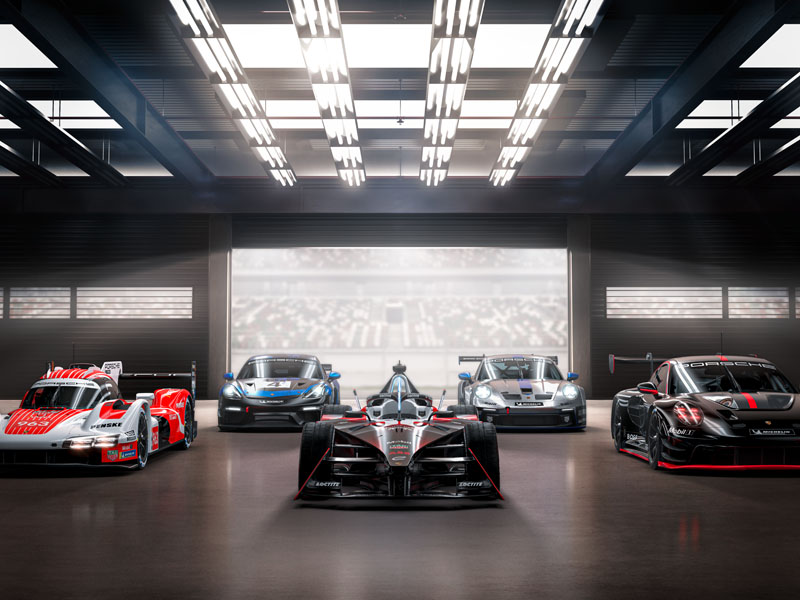
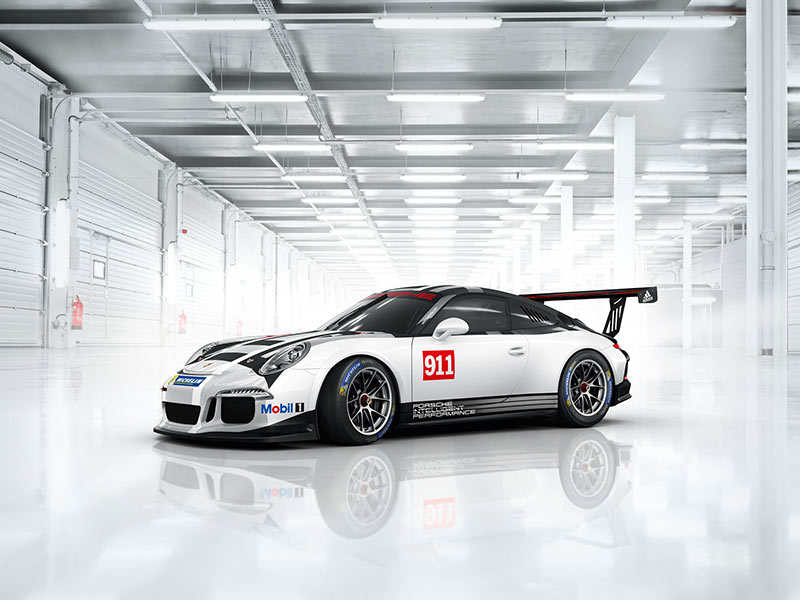
This is demonstrated by a number of convincing examples: in motor racing, the Porsche GT3 R Hybrid led the field for hours at the 24-hour race at the Nürburgring. The Cayenne S Hybrid (Combined: 8.2 l/100 km; CO2 emissions: 193 g/km)* has already gone into series production. Another milestone in the history of Porsche: the 918 Spyder high- performance sportscar currently being developed for series production. Offering sportscar technology for four, the Panamera S Hybrid (Combined: 7.1 l/100 km; CO2 emissions: 167 g/km)*, due to launch in 2011, will be another clear demonstration of our dedication to environmental compatibility.
All of our petrol engined vehicles operate on fuels with a biofuel/ ethanol content of up to 10 %. Our diesel vehicles are compatible with a biofuel blend of up to 7 %.
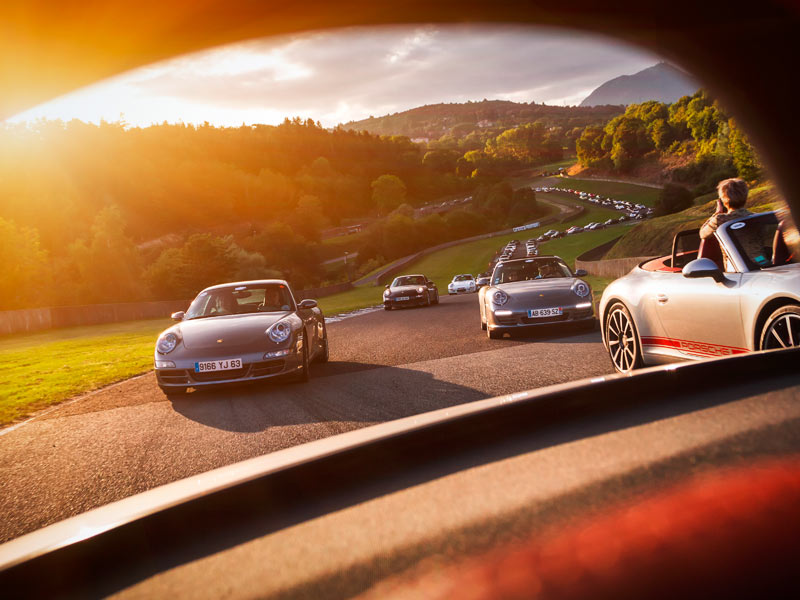
The training courses offered by the Porsche Sport Driving School teach you how to use environmentally friendly technologies effectively, without detracting from the overall driving experience.
Vision and knowledge of the available options play as important a role in this respect as they do in terms of driving safety. Drive with foresight and avoid unnecessary acceleration phases and subsequent braking manoeuvres. Also avoid short spurts of acceleration, maintaining a consistent speed throughout your journey to reduce fuel consumption.
Learn how to use the technological innovations on your vehicle such as Porsche VarioCam Plus or direct fuel injection properly for the benefit of the environment – while still enjoying the performance of your Porsche to the full.
Discover how to achieve the best engine efficiency by selecting the correct engine speed and pedal position. The optimum flexibility of Porsche engines enables you to accelerate in high gear and to use high gears even when you are driving at constant or low speeds. This significantly reduces the revs per minute and fuel consumption.
We therefore advise you to take advantage of the engine’s braking power by downshifting when braking. The deceleration fuel cut-off on your Porsche engine will then reduce the fuel supply to zero.
This enables you to drive in a more foresighted and efficient way. You’ll learn these and many more tips at the Porsche Sport Driving School, and our courses will also show you how to put these into practice for a safer, more exhilarating and eco-friendly driving experience.
* These data were obtained using the Euro 5 measurement method (715/2007/EC and 692/2008/EC) in the NEDC (New European Driving Cycle) with standard equipment. The information does not refer to an individual vehicle and is not part of the offer, but is simply provided so that comparisons can be made between different types of vehicle. Further, up to date information on the individual vehicles can be obtained from your Porsche Centre.
Consumption figures were obtained on the basis of standard equipment. Special equipment may affect consumption and performance.