If the idea of a 911 GT3 S/C sounds wrong, nothing could be further from the truth
Copy link
Share on Facebook
Share on X
Share on LinkedIn
Porsche is a company that does things its own way. That often means challenging accepted ideas to create something exceptional – as is the case with its new GT cabriolet model, the 911 GT3 S/C
911 GT3 S/C: the first convertible Porsche GT car • The new Porsche 911 GT3 S/C is a further example of a Porsche where what seems wrong is right • The 911 GT3 S/C is a convertible that loses none of its sensational performance and agility in open-top form • It joins other ‘wrong’ decisions by Porsche that are considered right, including the rear engine in the 911 and putting the ignition on the left As we learnt with the story of why the engine of the 911 is placed in the rear, Porsche has been doing things right for over 75 years by, well, doing things what others initially considered wrong.And there are plenty more examples of it continuing to do so, even today. Take the 911 GT3 S/C, launched in the spring of 2026. To many, the idea of a convertible 911 GT3 might seem wrong. Why take something with the purity and precision of the 911 GT3 and compromise it by removing the roof? Convention, after all, dictates that convertibles are heavier and less rigid than a coupé, with reduced performance and agility as a result.But passion and engineering excellence – not convention – are what drive Porsche. And the 911 GT3 S/C – a convertible variant of the 911 GT3 – gives you all of the qualities of the coupé plus the ability to enjoy the elements and savour the sound of its high-revving boxer engine to the full.A Porsche 911 GT3 – but in convertible form? The concept of the 911 GT3 S/C might initially feel wrong to some, but in reality it proves to be absolutely right Photo: PorscheThe 911 GT3 S/C: a true Porsche GT in every aspectMeticulous engineering and a focus on lightweight construction make this a cabriolet that wears the GT3 badge with pride. The 911 GT3 S/C is manifestly not a marketing or branding exercise. It’s about Porsche’s desire to create a uniquely intoxicating driving experience.Central to that experience is the same 4.0-litre, flat-six engine used in the 911 GT3 coupé. Developing 510 PS (502 hp) and mated to rear-wheel drive and a short-ratio, six-speed manual transmission, it provides thrilling performance, a true sense of connection and an immersive soundtrack – especially with the roof down.The 911 GT3 S/C (left) alongside the other models in the 911 GT3 range – 911 GT3 (centre) and 911 GT3 with Touring Package. Despite being an open-top, ample use of lightweight materials means that it can go wheel-to-wheel, performance- and agility-wise, with its siblings Photo: PorscheHow the 911 GT3 S/C makes use of lightweight materialsIn the 911 GT3 S/C, the use of lightweight components and motorsport-derived technology shared with other GT models gives it the same precise, focused feel. The carbon-fibre bonnet, wings and doors are shared with the limited-edition 911 S/T. So too are the anti-roll bars and shear plate, which are also carbon fibre. Meanwhile, the centre-lock magnesium wheels and Porsche Ceramic Composite Brakes (PCCB) together reduce weight by almost 30 kg (around 65 lbs).Additional weight-saving measures include a special stainless steel sports exhaust system, magnesium roof ribs, a smaller battery, lightweight interior door trims and carbon-fibre pull handles. Overall, the 911 GT3 S/C has an unladen weight (DIN) of just 1497 kg (kerb weight: 3332 lbs) – making it lighter than any other current 911 convertible model.When developing the 911 GT3 S/C, Porsche engineers made extensive use of weight-saving materials like carbon-fibre and magnesium, like in the car’s wheels and brakes, as highlighted here Photo: PorscheAn open-top 911 GT3 that makes all the right movesThe chassis is essentially that of the 911 GT3 coupé, with no extra reinforcement needed due to its inherently strong structure. Double-wishbone front suspension – a first for an open-top 911 – and rear-axle steering combine to give the 911 S/C the agility and responsiveness that Porsche GT models are famous for. “The car offers driving pleasure on winding roads that was previously virtually unheard of in an open-top car,” says Andreas Preuninger, Head of GT Cars at Porsche.Exclusive exterior elements highlight the dynamic character of the 911 GT3 S/C and serve a practical purpose. The 911 S/T-derived doors and front wings feature sculpted vents that optimise airflow, while the side stonechip panels, rear Gurney flap and windscreen surround are all finished in black. It all adds up to a car that looks like no other 911.Andreas Preuninger, Director of the GT Model Line at Porsche – seen here with the 911 GT3 S/C – says it offers driving pleasure on winding roads that was previously virtually unheard of in an open-top car Photo: PorscheIn many ways the 911 GT3 S/C is a car of contradictions: searing pace and advanced engineering meet the simple purity of open-air motoring. Conventional wisdom says that you can’t have a genuine sportscar that’s also a convertible. But as Andreas Preuninger says: “I couldn’t imagine a better driver’s car than one without a top.”On the evidence of the 911 GT3 S/C, he’s not wrong.
Make a statement. The new Porsche 911 GT3 S/C
Configure yours
Continue reading
How Ferdinand Porsche invented – and Porsche reinvented – the hybrid car
From the Semper Vivus and 918 Spyder to today’s 911 T-Hybrid models, discover how Porsche turned electrification into a performance technology
Read more
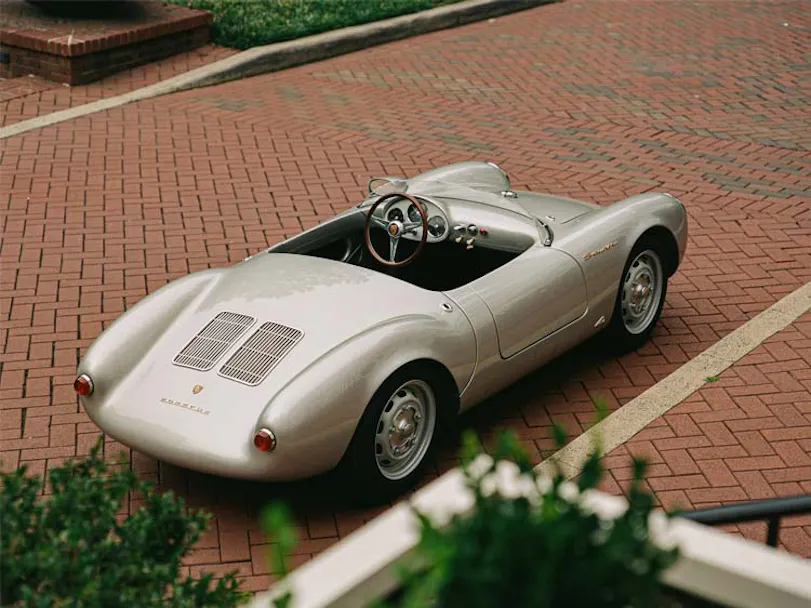
How Hedley Studios reinterpreted the Porsche 550 at 80% scale and 100% electric
Hedley Studios spent years studying the Porsche 550 to understand what made it special. Founder Ben Hedley explains how the team recreated its design, engineering and driving character at 80 per cent scale
Read more
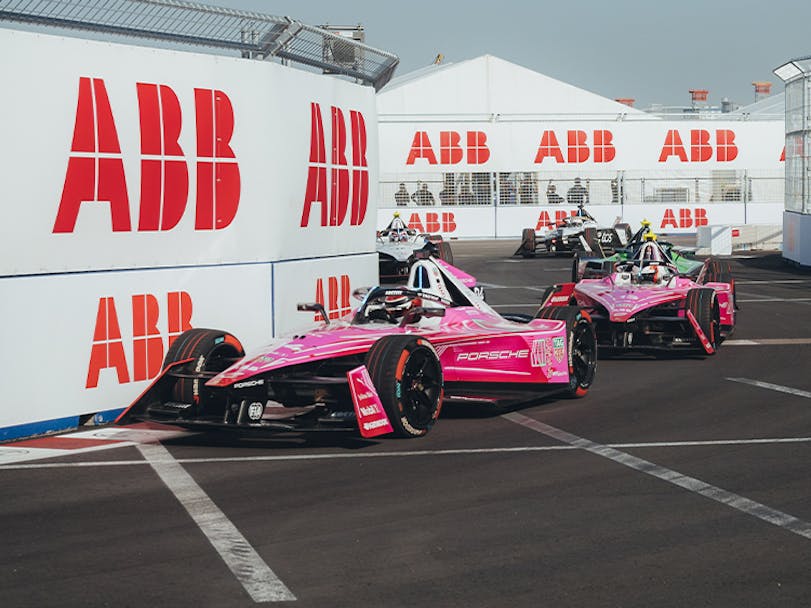
What is Formula E and how fast are the cars?
Formula E is one of motorsport’s most entertaining series. With Porsche entering works and customer teams in the all-electric championship, find out all about its hi-tech race cars
Read more