The story behind by the Flachbau RS: created by Sonderwunsch, inspired by Porsche history
Discover how the Flachbau RS became the ultimate expression of a customer’s performance dreams
Copy link
Share on Facebook
Share on X
Share on LinkedIn
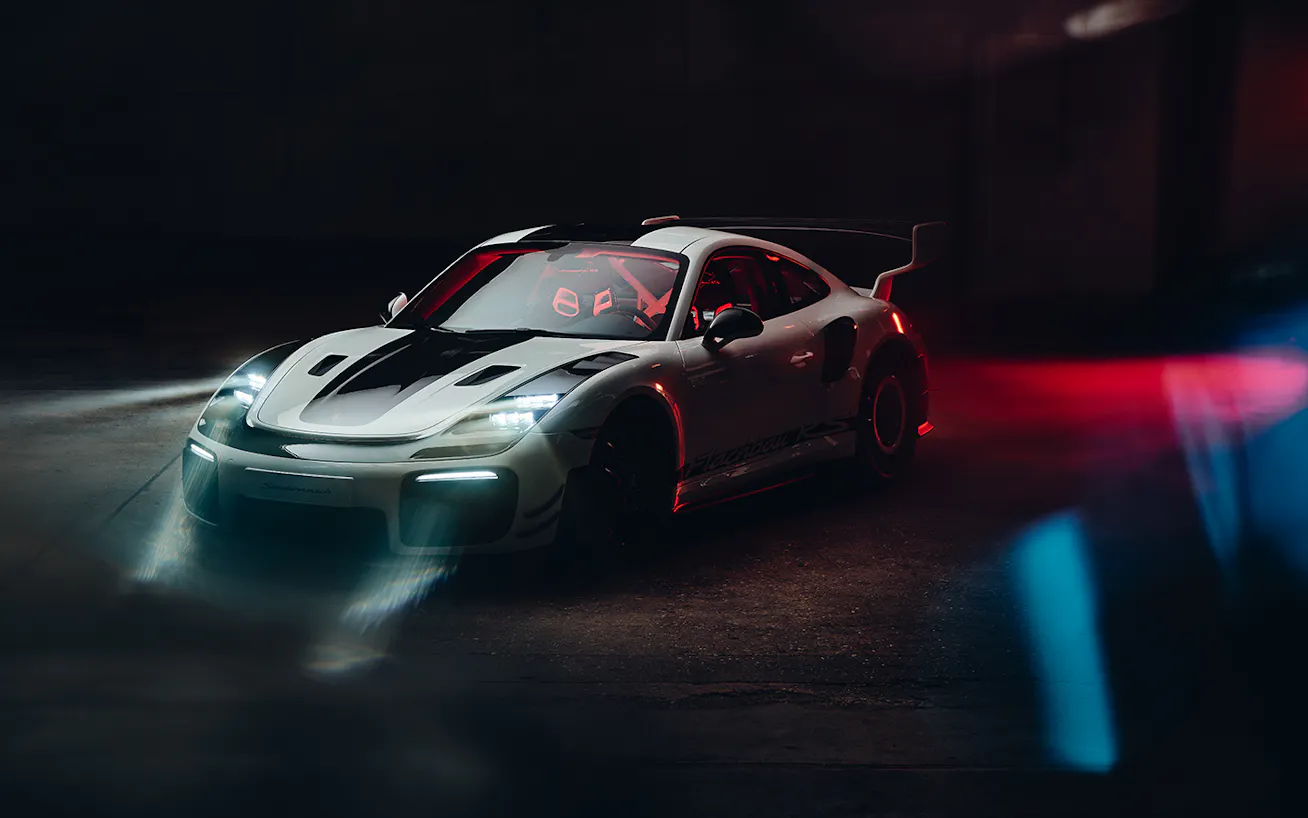
From its slanted nose to the 911 GT2 RS engine, 911 GT3 R rennsport rear wing and modified Manthey elements, the Flachbau RS is a one-of-a-kind Sonderwunsch car that combines performance and aesthetics, heritage and the future, packaged into a 1970s-inspired silhouette that is still a star turn today
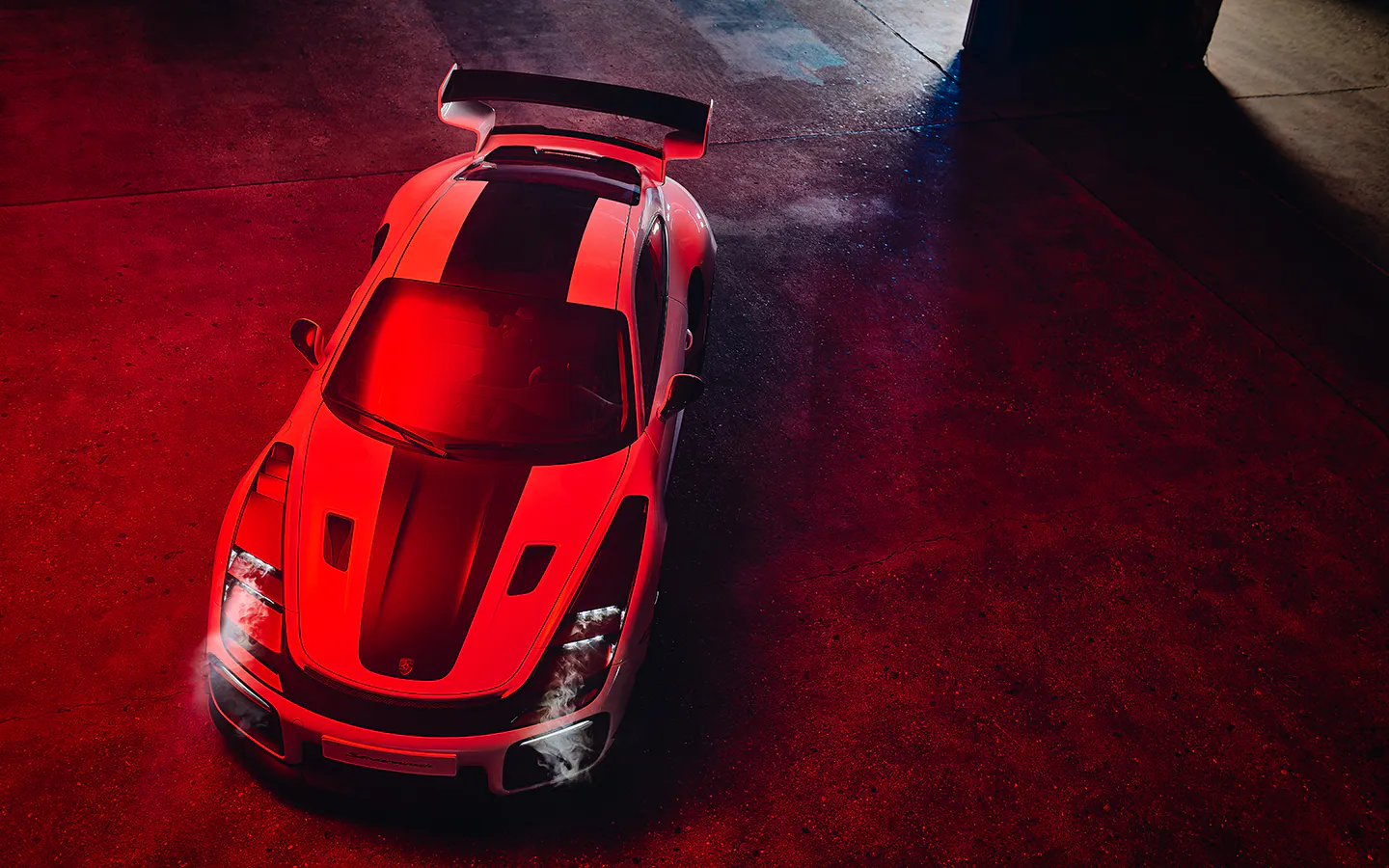
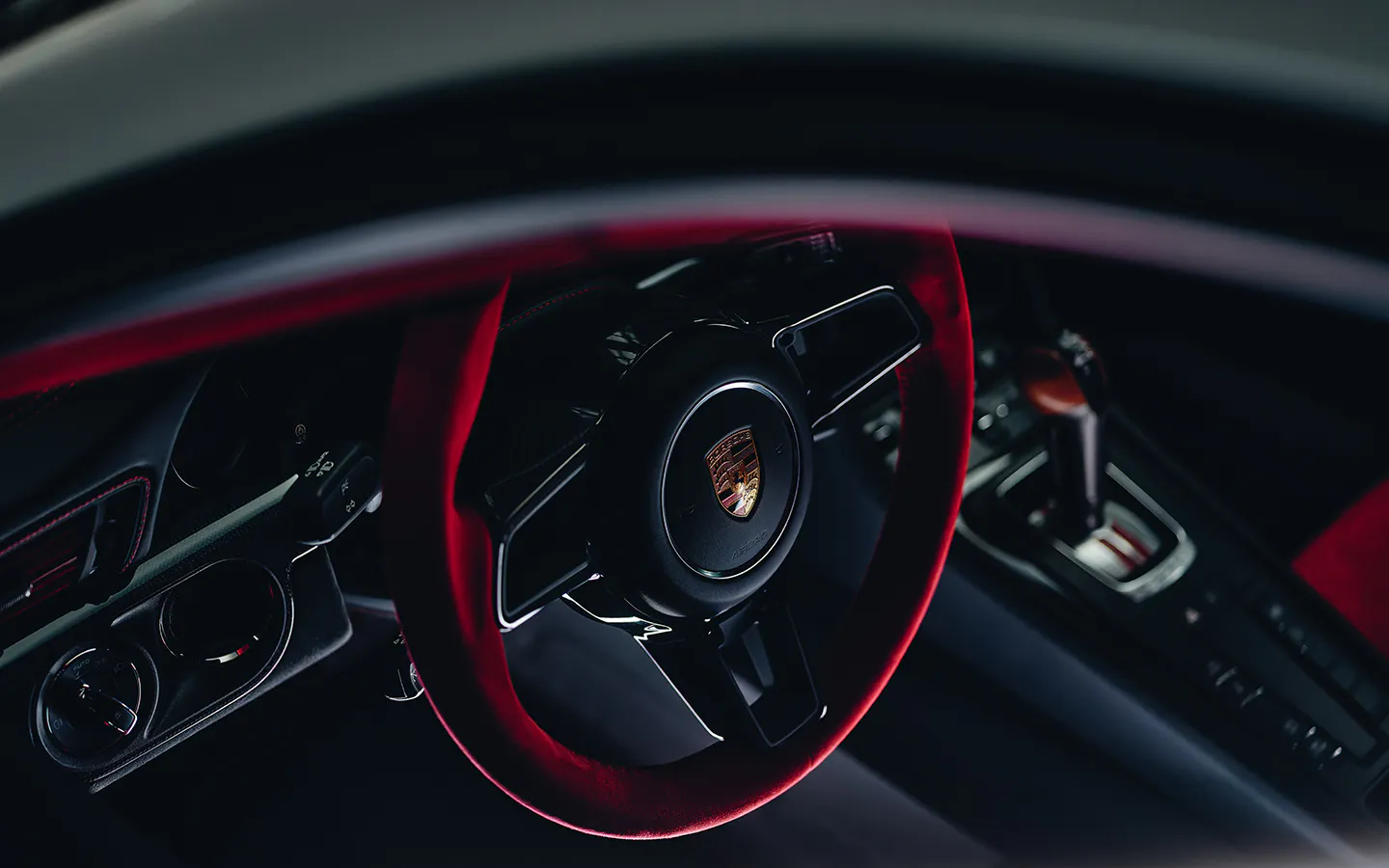
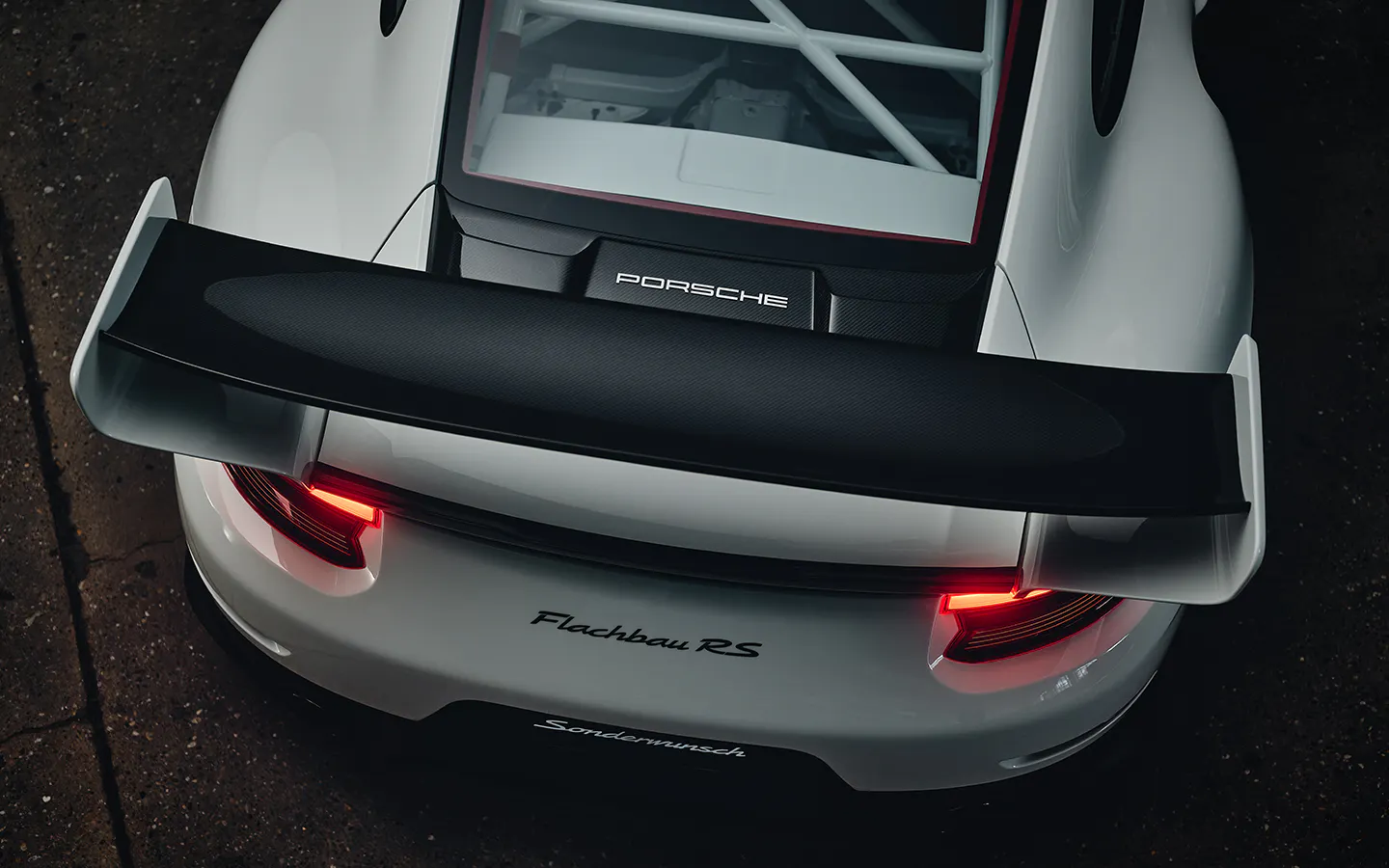
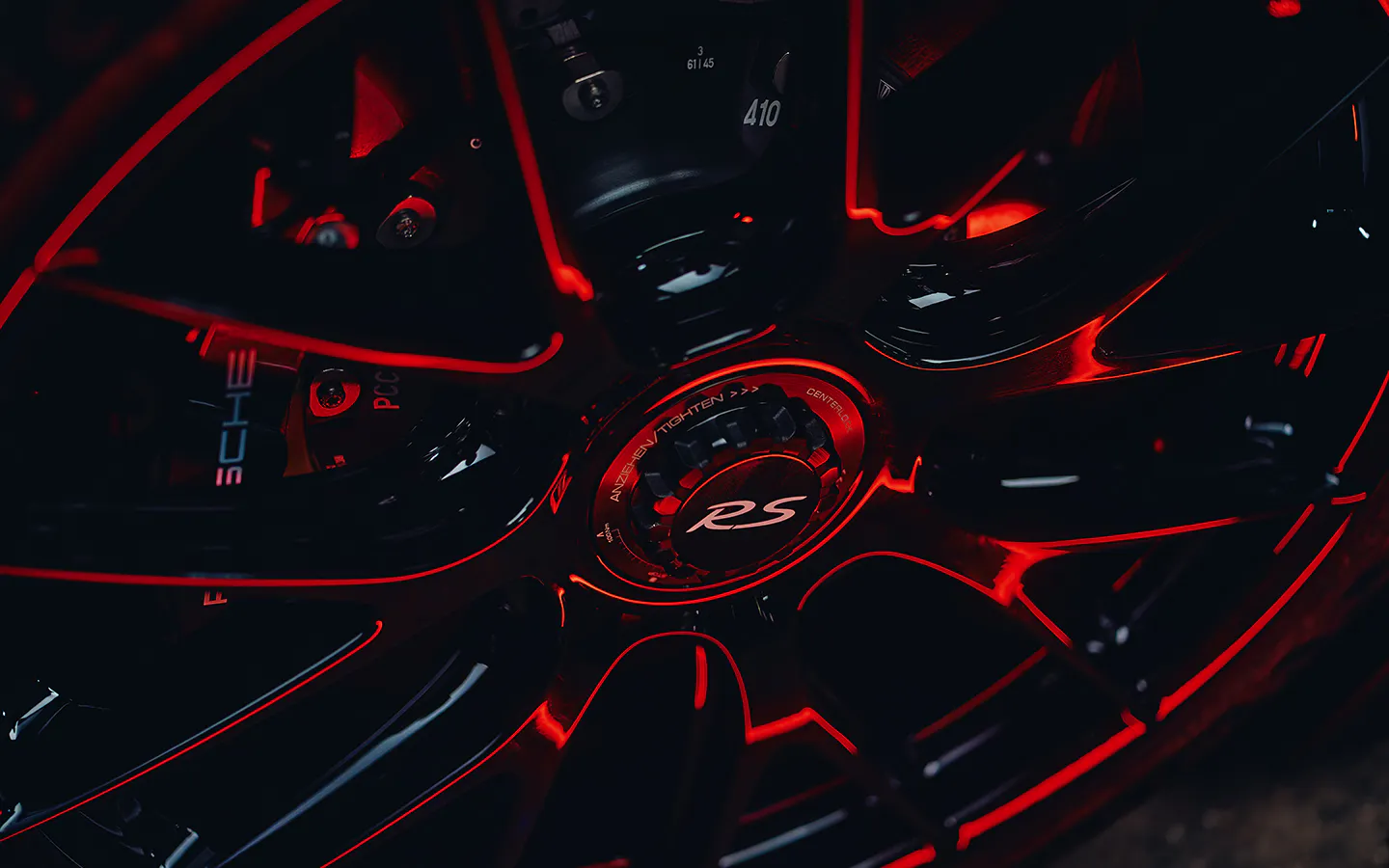
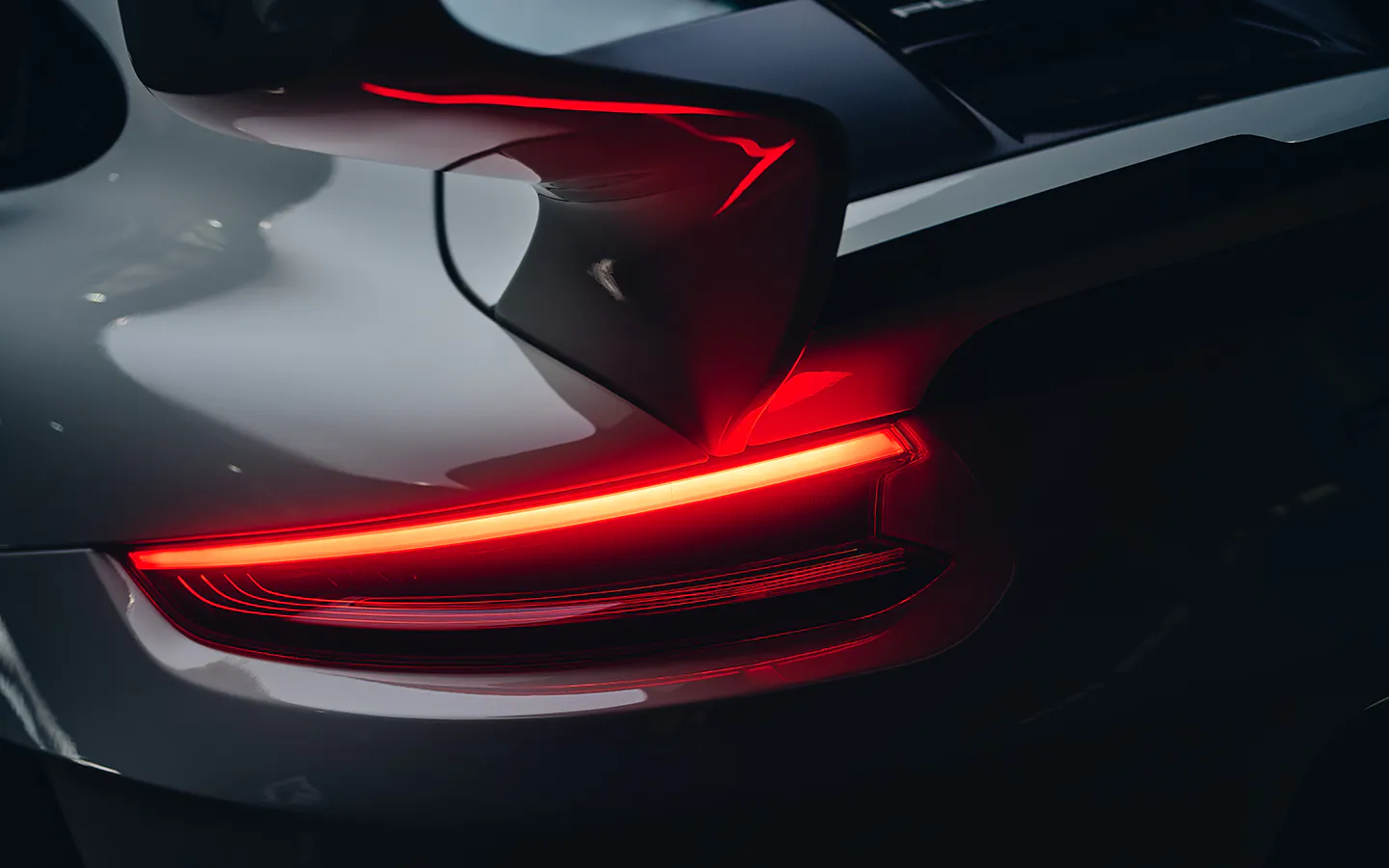
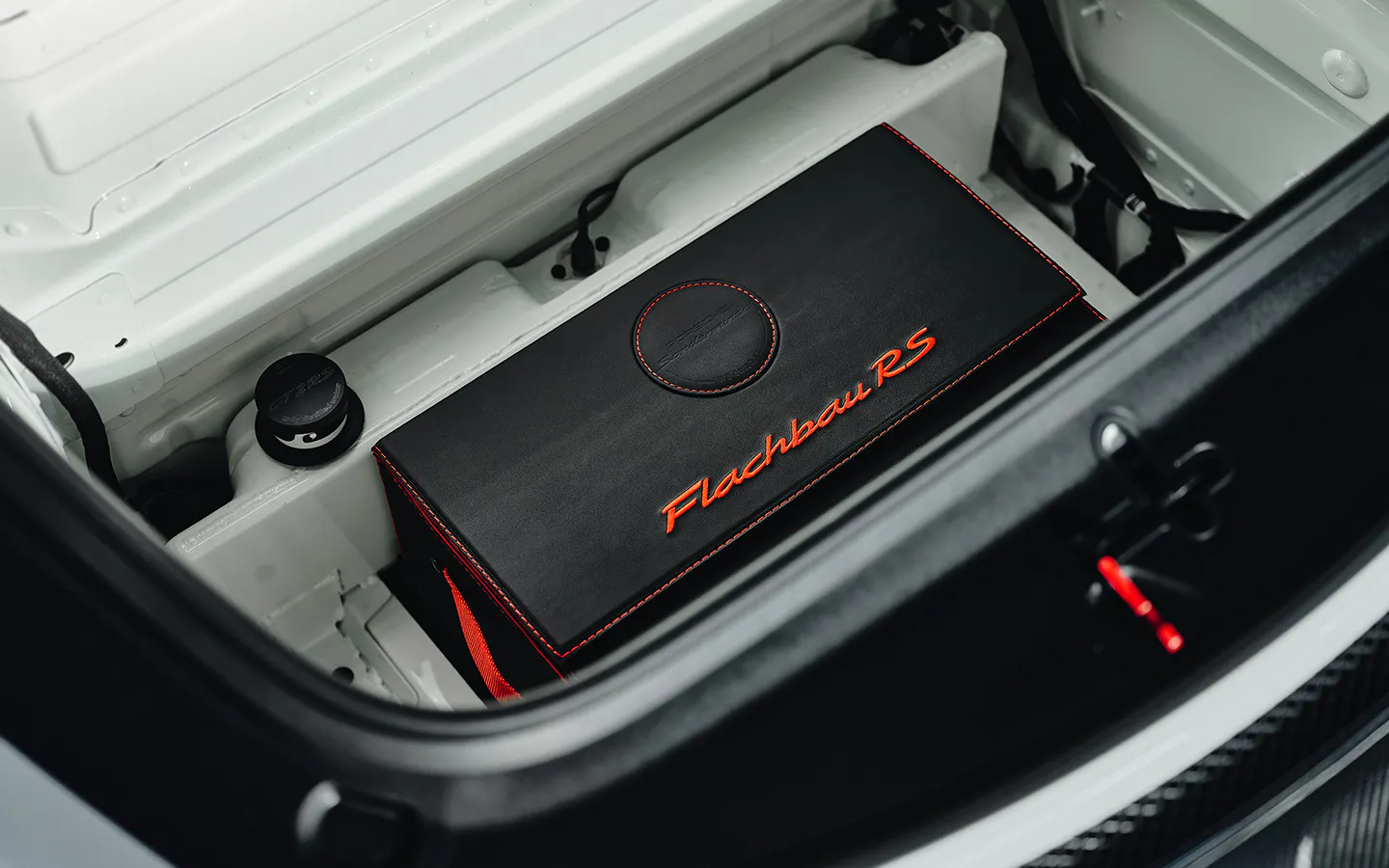
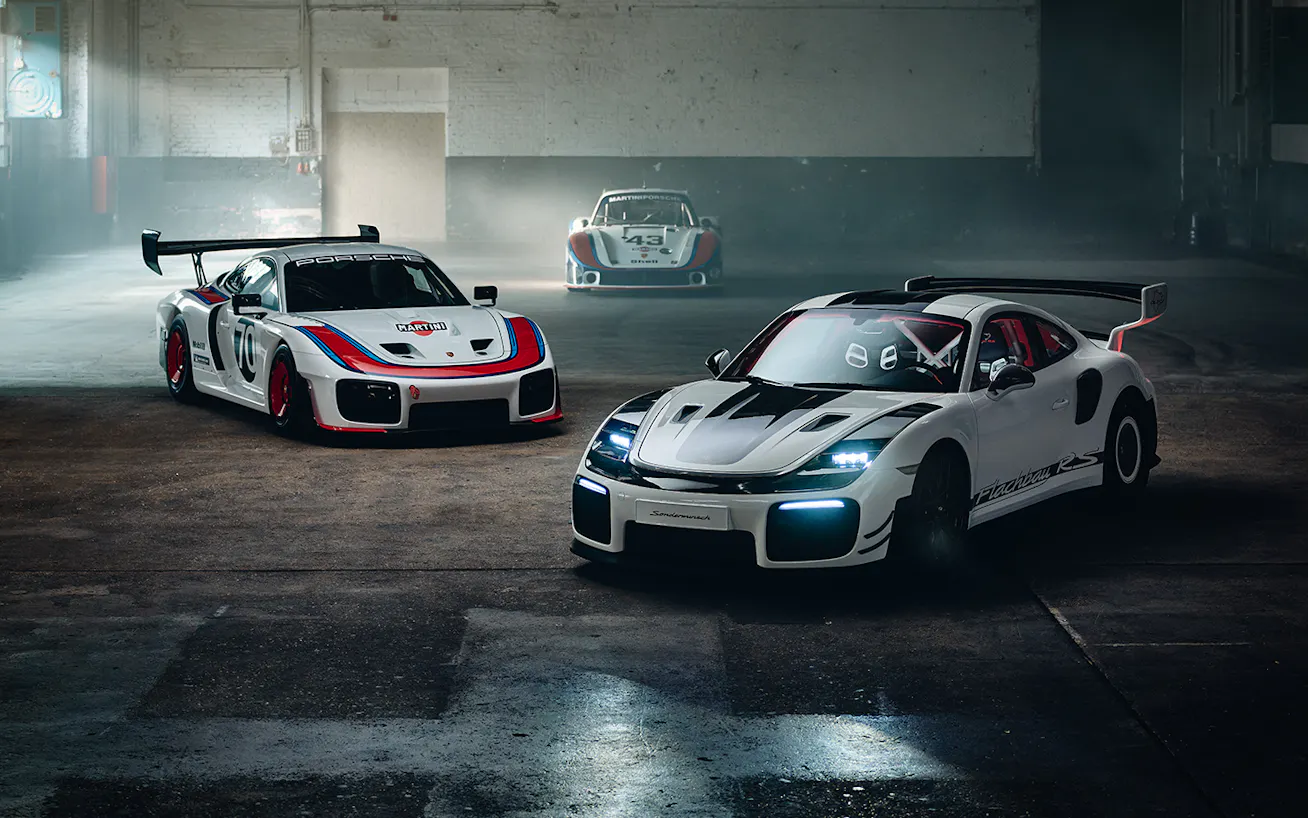
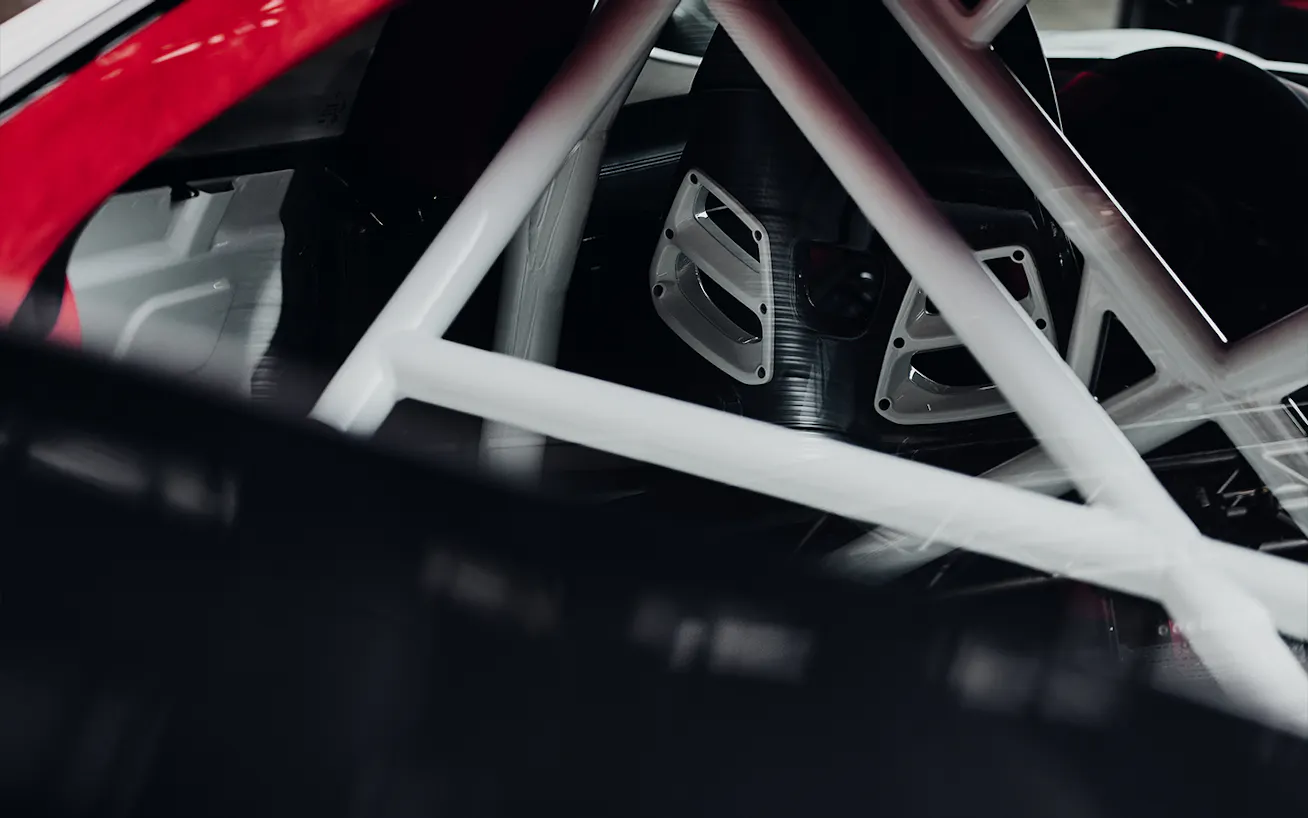
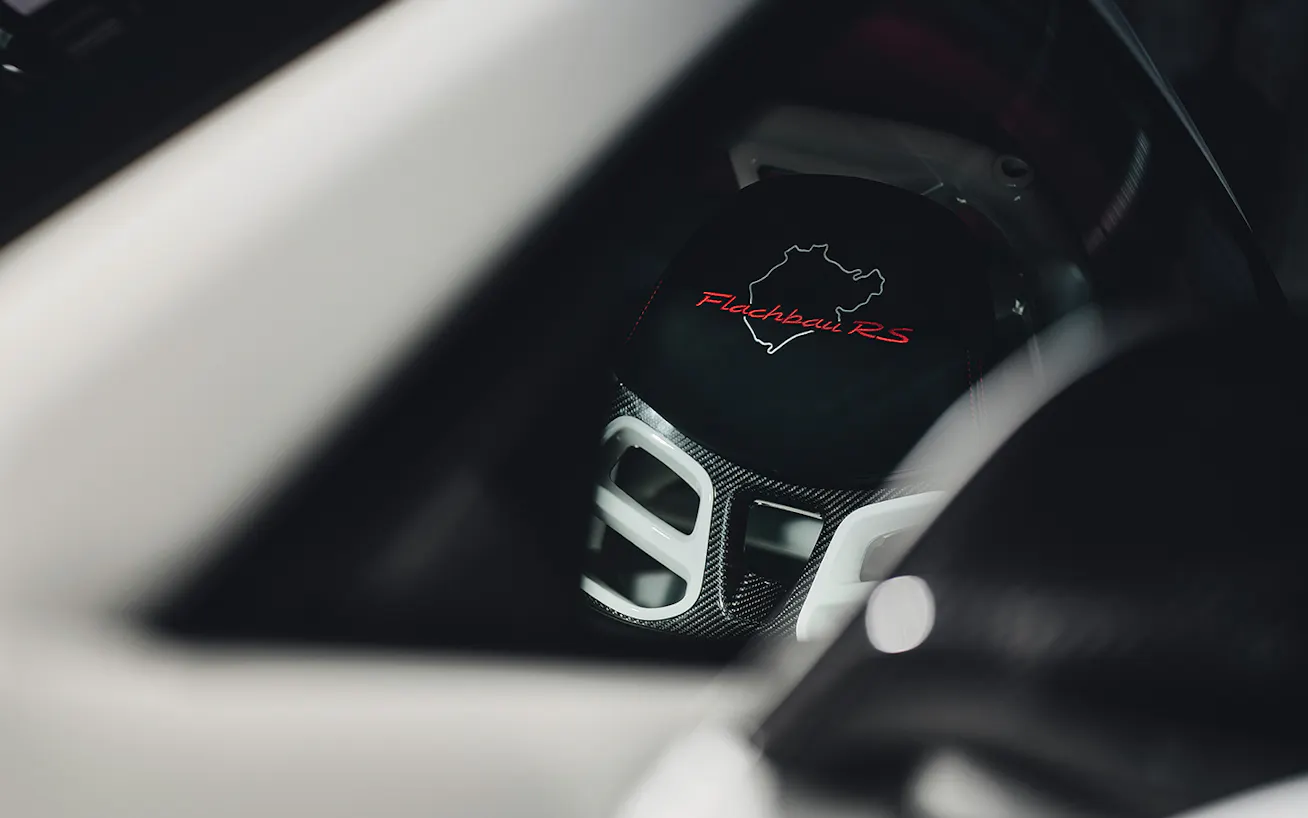
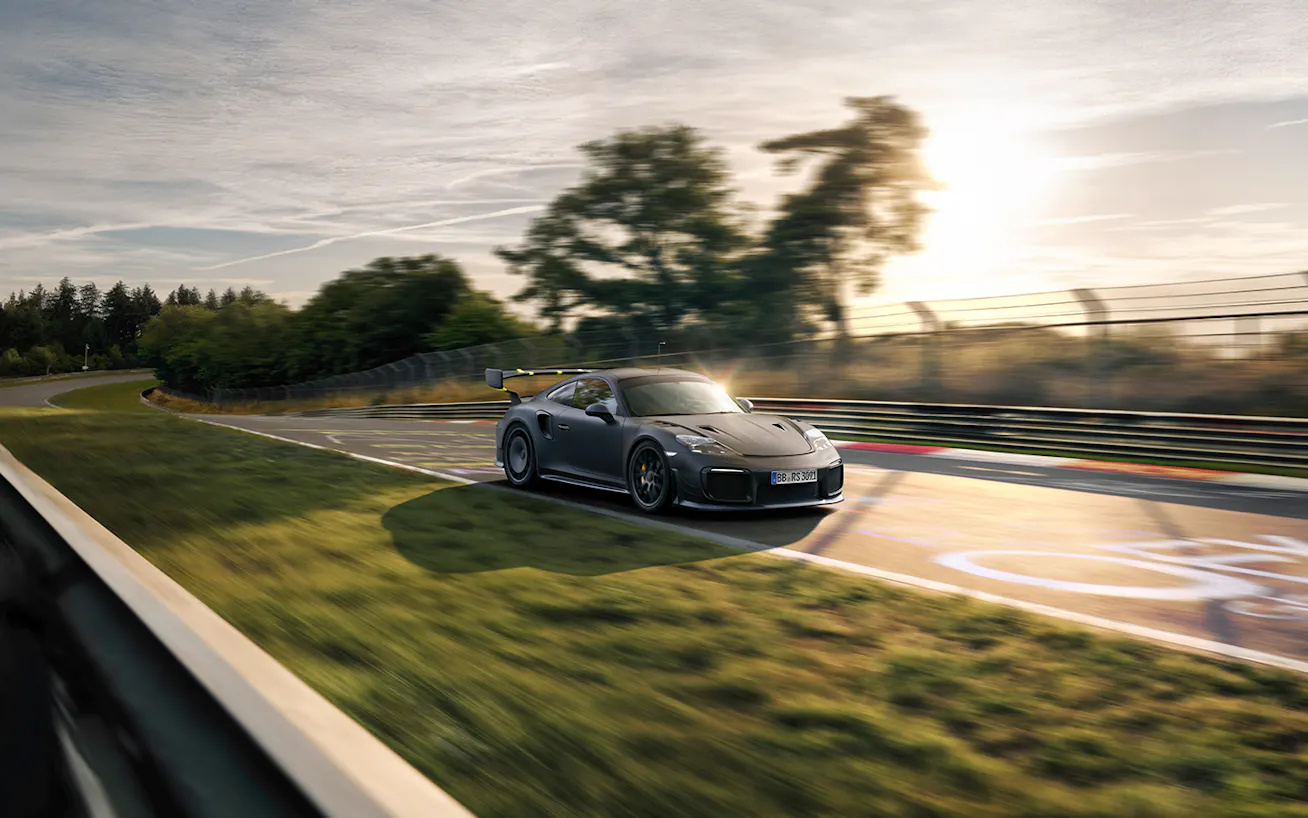
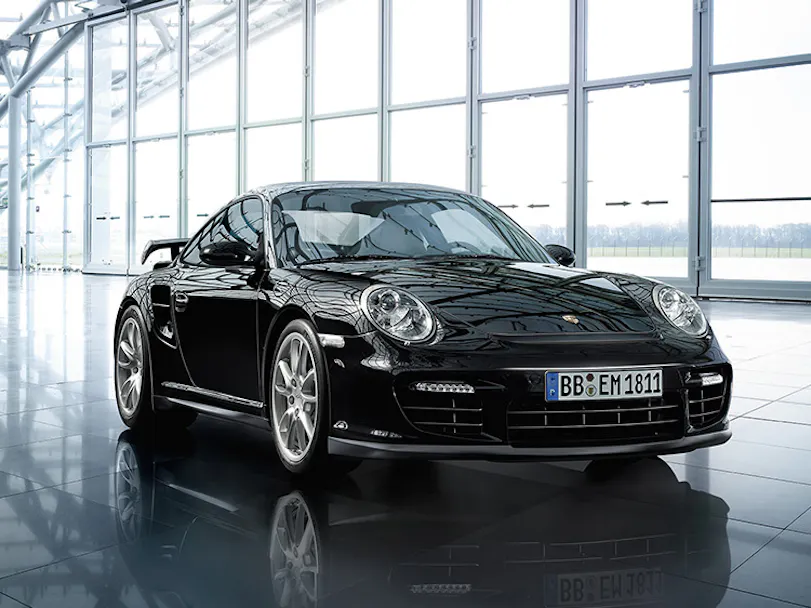
Fast facts: the Sonderwunsch Flachbau RSThe Flachbau RS is a Sonderwunsch customer one-off based on the 911 GT2 RS, improving its already striking performance with additional design features, such as a 911 GT3 R rennsport (992) inspired rear wing and Manthey Kit-based aerodynamic elements Though inspired by several different Porsche sports cars, the Flachbau RS stands on its own – a personal, special creation that took months to develop The customer’s goal was two-fold: to raise performance even further while keeping the heritage Flachbau silhouette of the 1970s race car. The final car features a stripped-back but tasteful interior and lightweight construction To ensure the car met the customer’s rigorous performance requirements, it was tested on the Nürburgring Nordschleife – the legendary circuit where so many Porsche cars have been developed. The Flachbau RS ended up driving more than 1,000 test kilometres, repeatedly hitting lap times of under seven minutes When dreaming up a Sonderwunsch vehicle inspired by sports car greats, it’s easy to fall back into familiar patterns. The owner of the Flachbau RS set out to break them all. Taking the 911 GT2 RS from their own collection as a base for their new Sonderwunsch car, every detail was rethought – but keeping the same legendary engine. The goal was not to make a decorative special edition or simply spruce up an existing model using a few historic details. Instead it was to build a unique car focused on performance and one reflecting the customer’s personality. The Flachbau RS had to combine the best of all worlds: lightweight construction, outstanding track performance, a heritage silhouette, an interior that was comfortable to take to the road in and an exterior paint job to fall in love with. The result of those demanding specifications – the Flachbau RS – manages it all, and more. With a body inspired by the historic 935/78 “Moby Dick”, a rear wing similar to that of the 911 GT3 R rennsport (992) and performance optimised with Manthey-based aerodynamic elements as well as extensive lightweight measures inside the cabin and luggage compartment, it is a sports car unlike any other. Special, personal and, most importantly, street legal. What is the Porsche 930 Turbo Slantnose?Porsche race cars that made Le Mans historyWhat is the Porsche 911 GT2?The Flachbau RS is a one-off car created by Sonderwunsch that’s inspired by the legendary silhouette of the 935/78 “Moby Dick” race car Photo: PorscheWhat is the Porsche Flachbau RS? The German word ‘Flachbau’ translates into English as ‘slantnose’ – it’s a name that comes with an illustrious motorsport history. The first of its kind was the 1976 Porsche 935 – based on the 911 and developed for the Group 5 racing category, when racing regulations began to allow for wider bumpers. For the 1977 version of the model, a twin-turbo engine was added. The variant of the 935 that’s perhaps the most famous of all is the 935/78 “Moby Dick”, a Le Mans contender that won the 6 Hours of Silverstone in 1978 with a seven-lap lead, driven by Porsche motorsport legends Jochen Mass and Jacky Ickx. It’s standout shape attracted plenty of attention and, soon enough, Porsche customers began asking if it could become available as a road-going car. As a result, the first Sonderwunsch 911 Flachbau was created in the 1980s, available as a re-build of the flagship 911 Turbo. More than 900 of them were sold to eager customers. However, the reference point most closely used by the owner of the Flachbau RS was the Porsche 935 from 2018. Built to commemorate the Rennsport Reunion motorsport event at Laguna Seca Raceway in California, the 2018 Porsche 935 boasted a huge 700 PS and was itself inspired by the very same “Moby Dick” that garnered such acclaim in 1978. ,,,,,The exterior details of the Flachbau RS The original 911 GT2 RS (991) has an aggressive front end, but it still carries the recognisable 911 face. The Flachbau RS changes that completely. To accommodate the trademark slantnose front end, a new cascading lighting concept was developed which replaces the round eyes of the 911 with flat lamps, five on each side. Additionally, new louvres and fenders were added, as well as several key Manthey kit parts, such as the flics (otherwise known as dive planes, canards or aero flaps), diffuser, rear wheel covers and a new chassis including a lift system. The rear wing shape is inspired by the 911 GT3 R rennsport (992). To round off the motorsport look, the exterior paint job follows a two-tone concept – Grand Prix White and matte black – combined with visible carbon parts for contrast. The brake callipers are high-gloss black. One thoughtful detail is that the stripe colours are inverted compared to the series 911 GT2 RS. Where the original boasted outer visible carbon stripes and had the middle stripe painted, the Flachbau RS features the middle stripe in carbon and has the outer stripes painted instead. The engine belongs to the base car – the 911 GT2 RS – in the form of a 3.8-litre, six-cylinder unit that produces 700 PS. The Flachbau began its life in the 1970s, and quickly turned into a fan favourite – from the race track to the road – and today all the way to a one-off car produced by Sonderwunsch at Porsche Photo: PorscheThe lightweight construction of the Flachbau RS While the flattened nose gives the Flachbau RS its distinctive look, its hyper lightweight construction gives it an edge. The engineering team managed to shave off 31.6 kg from the standard car weight, including interior improvements. For example the removal of some interior carpeting and noise insulation, the rear side panels and the sound system. The trunk area was similarly stripped, producing a bare metal look. The sections of metal that were now visible on the inside were painted the same Grand Prix White as the exterior. The Sonderwunsch customer one-off Flachbau RS boasts a stripped-back interior with open metal elements painted in the same colour as the car exterior Photo: PorscheThe interior of the Flachbau RS Despite all the weight-reduction measures of the car, the interior has kept its charm. New carbon side panels were added, with bezels placed to cover visible mechanics. The floor mats have been personalised, as has the headrest, which has been stitched with an individual design. The seatbelt outlets were painted white, while the roll cage remained as it was on the original version of the car. Last but not least, visible cables were wrapped or finished depending on their position and function. Every detail of the cockpit has been thought through, from personalised floor mats to a headrest with personalised stitching Photo: PorscheThe story of how the Flachbau RS was tested at Weissach, Mendig and on the Nordschleife/Nürburgring Building the machine took many hours to complete. But the job didn’t finish there. Porsche engineers now had to test the Flachbau RS on the track. One of the customer’s top priorities was speed and performance – and here, the designers and engineers at Sonderwunsch certainly delivered. The first step was rollout testing at Mendig, a former military airfield now used for high-speed testing, and inside a specialised wind tunnel. Next came endurance testing at the Weissach proving ground before finally the ultimate challenge for Porsche sports cars – to undergo testing on the historic Nordschleife at the Nürburgring. There, the car was piloted by Porsche test driver Lars Kern. The Flachbau RS underwent more than 1,000 km of endurance testing on the Nürburgring Nordschleife, regularly clocking lap times of under seven minutes Photo: PorscheThe Flachbau RS ended up completing 50 performance laps here, adding up to more than 1,000 km of endurance testing on one of the most demanding circuits in the world. During that testing, the car recorded multiple lap times below seven minutes. Most were driven using the high down-force set-up of the rear wing – a “worst case” scenario in terms of endurance.
Find your perfect 911 GT3
Build your Porsche
Continue reading
Download Porsche 911 GT2 wallpapers
Download a beautiful Porsche 911 GT2 wallpaper for your phone or computer’s home screen
Read more
Porsche Paint to Sample: how to find your perfect colour
Colour is one of the most personal choices when configuring a Porsche. Use the Paint to Sample Colour Configurator to discover more than 230 exterior shades, explore the stories behind them and find the one that feels uniquely yours.
Read more
What is the Porsche 911 Turbo S Land Down Under, the special car inspired by Australia?
The story behind a special 911, created by Porsche Sonderwunsch, Style Porsche, Porsche Australia and artist, Werner Bronkhorst, featuring handcrafted touches inspired by the landscape and culture of Australia
Read more