Tech jobs at Porsche: the paint shop innovation manager
Harnessing AI in order to perfect the paint process of Porsche cars
Copy link
Share on Facebook
Share on X
Share on LinkedIn
Colour is a key factor when choosing a new car – and the paint needs to be perfect. Philipp Sigel is an innovation manager in production planning for the Porsche paint shop. He explains how AI and constantly evolving technologies help achieve this
Many different processes come together when a customer goes about choosing a new car. There are practical ones, rational ones and even irrational ones too. But a big factor, especially for Porsche customers, is the emotional aspect. A significant factor in that is the colour you choose for your car. It’s one of the biggest decisions you will make. And that’s why the role of the paint shop at Porsche cannot be overstated. Philipp Sigel is an innovation manager in production planning for the paint shop at Porsche. It’s his job to be on top of technology innovations, particularly in the field of AI, with the end goal that the car’s colour and painted surfaces are perfect and exactly match what the customer ordered. As Philipp explains, it’s a constantly evolving role that mixes engineering, planning and creativity, along with a strong focus on strategic thinking.Philipp Sigel is an innovation manager in production planning for the paint shop at Porsche. It’s a role that combines engineering, innovation and the evaluation of new technologies, with an increasing focus on AI Photo: PorscheTell us about what you do at Porsche, Philipp.“I’m an innovation manager working within the Porsche paint shop that deals with the painted surfaces of the cars. We use artificial vision technology that detects defects, however small, using cameras and AI algorithms on the painted surface.“My role is based in production planning, where I drive innovation and introduce new technologies into the paint shop, such as artificial vision systems for automated defect detection. There’s a strong focus on applying AI to develop data-driven approaches that improve the production process.”What was your pathway into this role? “Professionally, I’d describe myself as a trained car mechanic who later became an automotive and aerospace engineer. I started my career at Audi before studying in Munich.“I’m also a passionate rock climber, which originally brought me to Spain, where I moved after my studies and worked for several years with artificial vision technology. That’s where Porsche discovered me, during a technology scouting visit in Valencia. At the time, I was closely involved in projects using machine vision and AI. Thanks to both my technical background and language skills, I led trials related to this technology for Porsche.“Everything came together and I’ve now been at Porsche for over two years – which still feels like a ‘wow’ moment for me. It was quite unexpected to end up at Porsche, but of course a great opportunity. Since joining I’ve been working on a range of topics around AI and new technologies, focusing on how they can be applied to improve production processes.”
?si=IsIxGATCJq7DOjyEHow does the technology that your team deploys in the paint shop actually work?“There are several layers of paint on a car body. In addition to protective and corrosion-resistant layers, the final layers are the base coat, which provides the colour, and the clear coat, which gives the surface its characteristic finish and protection.“After the paint has been cured in the oven, the car passes through a tunnel system equipped with 35 high-resolution cameras. These capture up to 80,000 images per car – that’s nearly one terabyte of data. This allows us to detect even the smallest paint defects. A neural network then uses this data to classify the type of defect – whether it’s an inclusion, a crater or simply dust on the surface, for example.“In the final step, these results are made available to the operators. They’re guided precisely to the relevant areas on the car, where they can inspect and, if necessary, rework the surface. In the end, it’s the combination that matters: AI provides objective data and transparency, while the final judgement and quality come from human expertise. This interaction ensures the consistently high standard expected from Porsche.”Why is this technology important for Porsche cars?“Data-driven production allows us to assess every single vehicle objectively and consistently. This gives us transparency and a common understanding of quality, helping us identify deviations at an early stage. Consistency is essential at Porsche, and that’s where data creates real value.”Where does Porsche seek inspiration for these new technologies and innovations?“There are several ways we do this. It can be through technology partners, start-ups, suppliers, research institutes or exchanges with other manufacturers. We continuously evaluate new developments in areas such as AI and production technology to understand where they can create value for Porsche. “But a really motivating aspect for me is that, as an engineer, you’re normally trained to think rationally and logically. However, when it comes to innovation at Porsche, we’re also given the freedom to be creative because A plus B doesn’t always equal C. We ask ourselves, ‘What if we approached it differently?’. When you’re working on a product which creates such an emotional feeling as a Porsche, this is really cool when you think about it.”Advanced technology is key in the Porsche paint shop, but it’s the combination with human expertise that ensures the highest level of quality Photo: PorscheChoosing a car colour is a huge part of the purchase process. How do you and your team feel about your role in this?“We really understand the importance of this and why we need to get it just right. Our colours are beautiful. You can go into a dealership and say, I want this colour, and nearly anything is possible. To be part of this journey for people who perhaps have been dreaming about a Porsche since they were a child – to create this exciting product, in this beautiful and desirable colour – is exciting and humbling for us.”What’s it like working in developing Porsche technologies, particularly in a tech-focused role like yours?“Porsche is one of the symbols of German engineering, a place where top-notch engineering disciplines all come together. As an engineer from Germany that’s important to me personally. But beyond the pure, logical calculation of making these cars, there is an emotional side to it too.“At Porsche, there’s an innovative spirit that you can see everywhere. It’s not just about creating innovations because they are cool and hip right now, the focus is always on the product. It comes down to whether they add value – is it helping us or not? Ultimately, the end goal is about how this benefits the customer.”What made this role your dream job?“Working on iconic products – products with a real engineering depth and creating and building a technology that directly impacts the car – makes this a dream job for someone like me. I think it's quite hard to find a combination like this somewhere else, where you have a job with real engineering depth yet you’re working with iconic products, as we do at Porsche.”“At Porsche, there’s an innovative spirit that you can see everywhere. But it’s not just about creating new innovations. It comes down to whether they add value or not,” says Philipp Photo: PorscheHow do you see your role and area of work developing in the future?“There are so many possibilities. My focus at the beginning was purely technical – so, are the tools working, for example – now it’s getting more and more strategic. Which tools should we use in the future? How should we use them? What role will AI play, which will be omnipresent. I’ll always have that technical side to me, but I see my role increasingly shifting towards taking a broader view – understanding how AI and new technologies can contribute to the future of production and helping shape that direction.”Taking you back a bit here – what’s your earliest Porsche memory?“Like many children, I had Porsche posters on my wall growing up. I was always fascinated by sportscars, not only because of how they looked, but because I wanted to understand how they worked.“Years later, driving a 911 for the first time became one of my defining Porsche moments. What impressed me most was the feeling that every detail had been carefully thought through. As an engineer, that’s something I still appreciate today.”What advice would you give to young people looking to start a career in tech, particularly at Porsche?“Stay curious, understand the process and build real skills. And, based on my experiences, I would also say always let there be room for surprises – because in my case, it was a totally unexpected surprise to be recognised by Porsche.”
Porsche Tech. Driven by You.
Shape the future of mobility together
Continue reading
How Ferdinand Porsche invented – and Porsche reinvented – the hybrid car
From the Semper Vivus and 918 Spyder to today’s 911 T-Hybrid models, discover how Porsche turned electrification into a performance technology
Read more
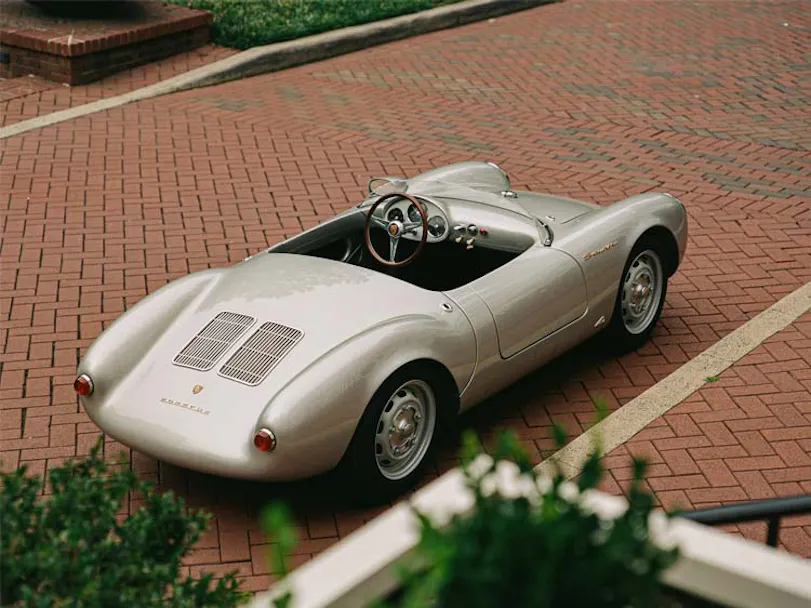
How Hedley Studios reinterpreted the Porsche 550 at 80% scale and 100% electric
Hedley Studios spent years studying the Porsche 550 to understand what made it special. Founder Ben Hedley explains how the team recreated its design, engineering and driving character at 80 per cent scale
Read more
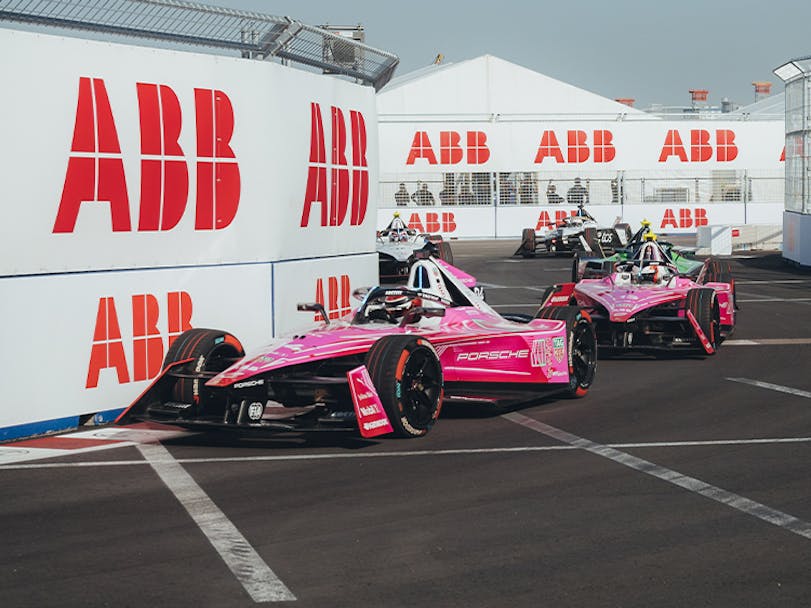
What is Formula E and how fast are the cars?
Formula E is one of motorsport’s most entertaining series. With Porsche entering works and customer teams in the all-electric championship, find out all about its hi-tech race cars
Read more