A guide to the Porsche 968 Club Sport. Why this lightweight driver’s car is gaining cult status
The high-performance sportscar from the mid-1990s that’s rapidly increasing in popularity
Share article
Copy link
Share on Facebook
Share on X
Share on LinkedIn
Seen by many experts as the high-point of the Porsche transaxle era, this 3.0-litre sportscar combines lightweight construction with stunning handling and performance
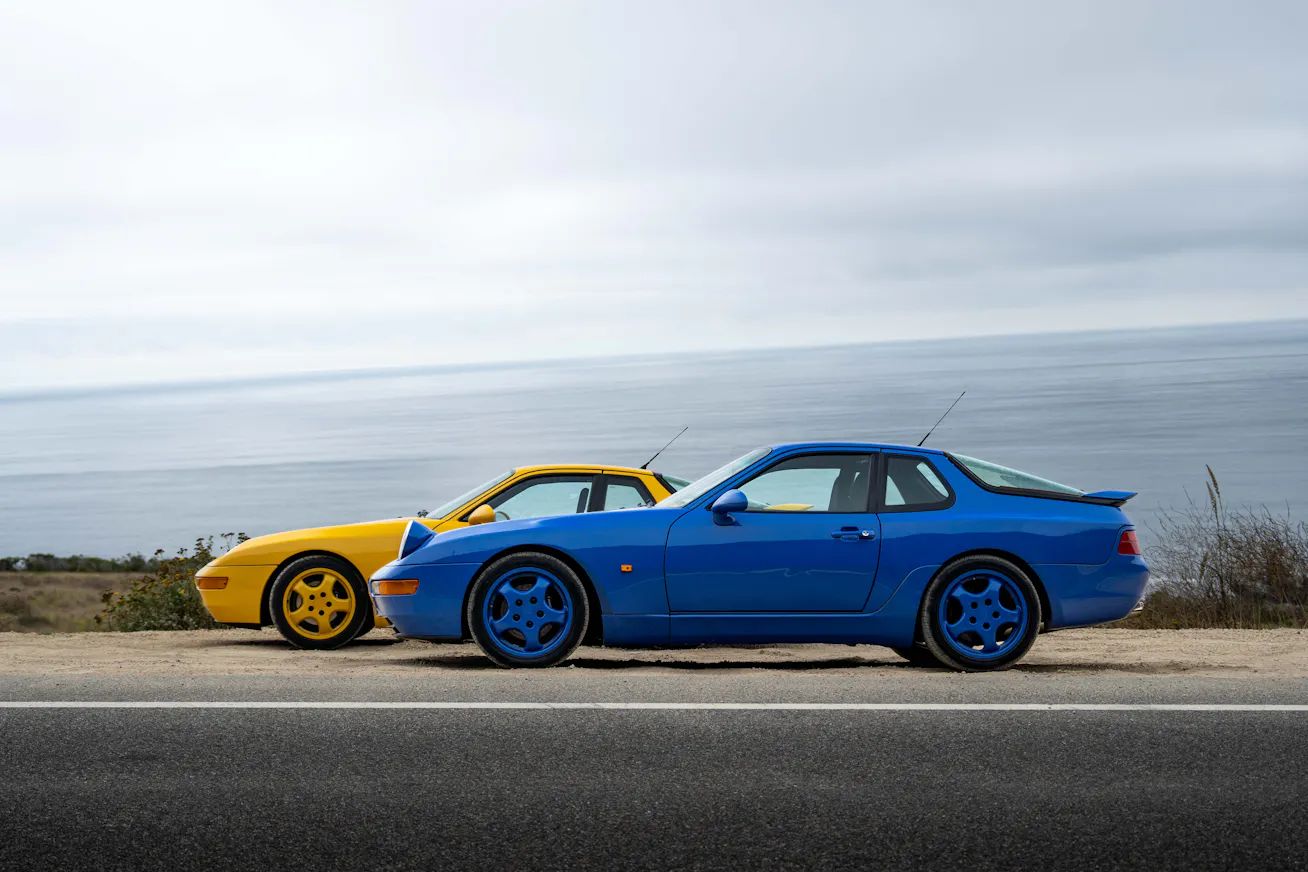
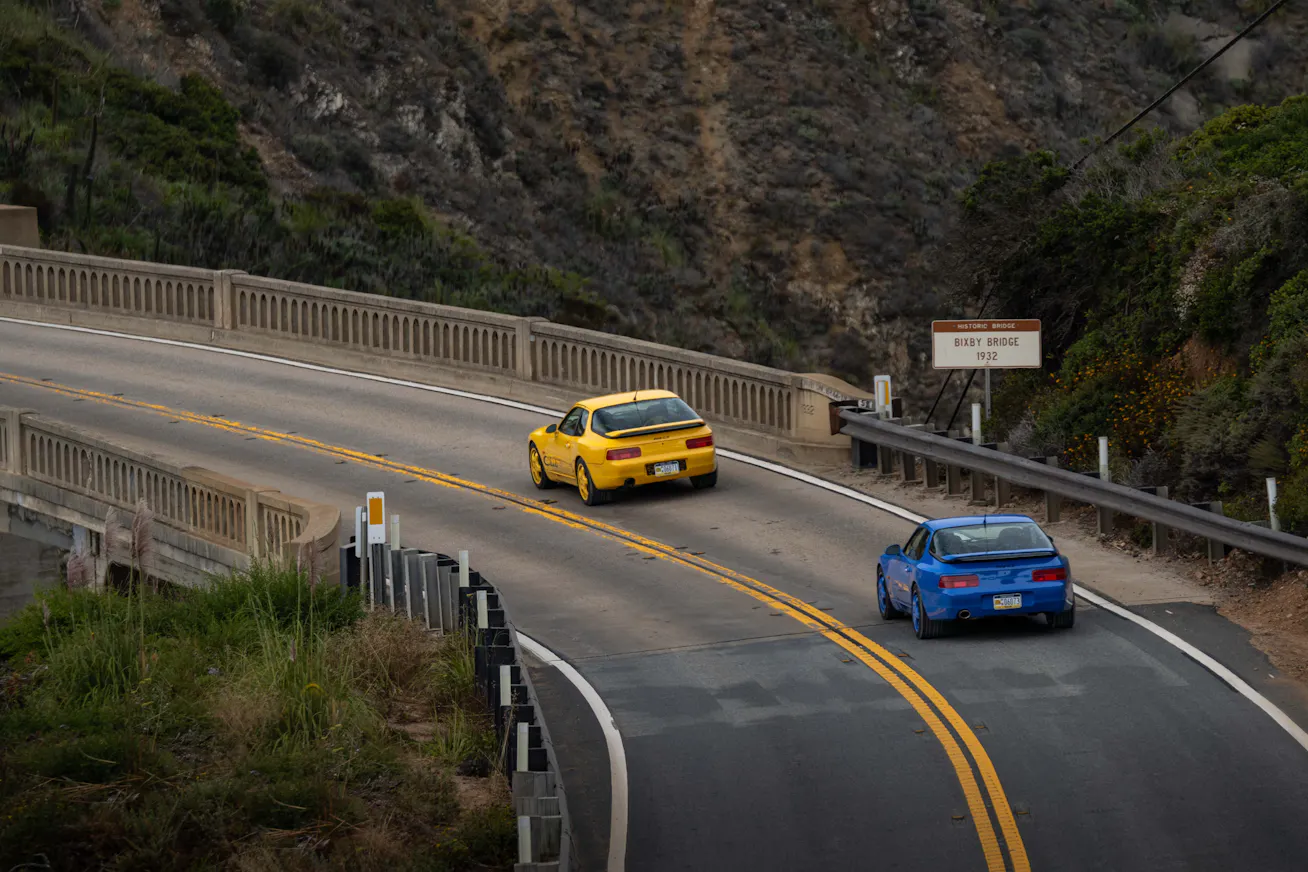
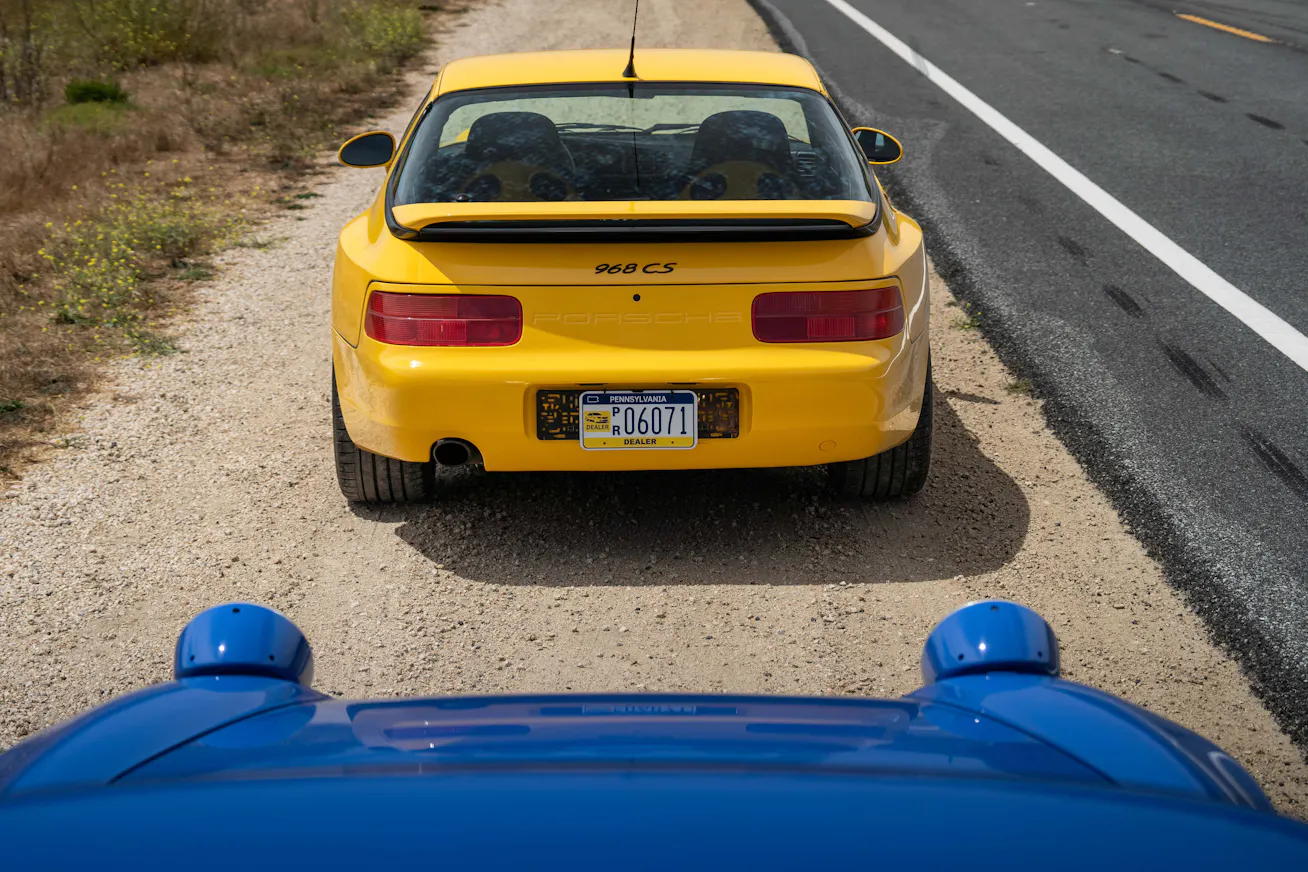
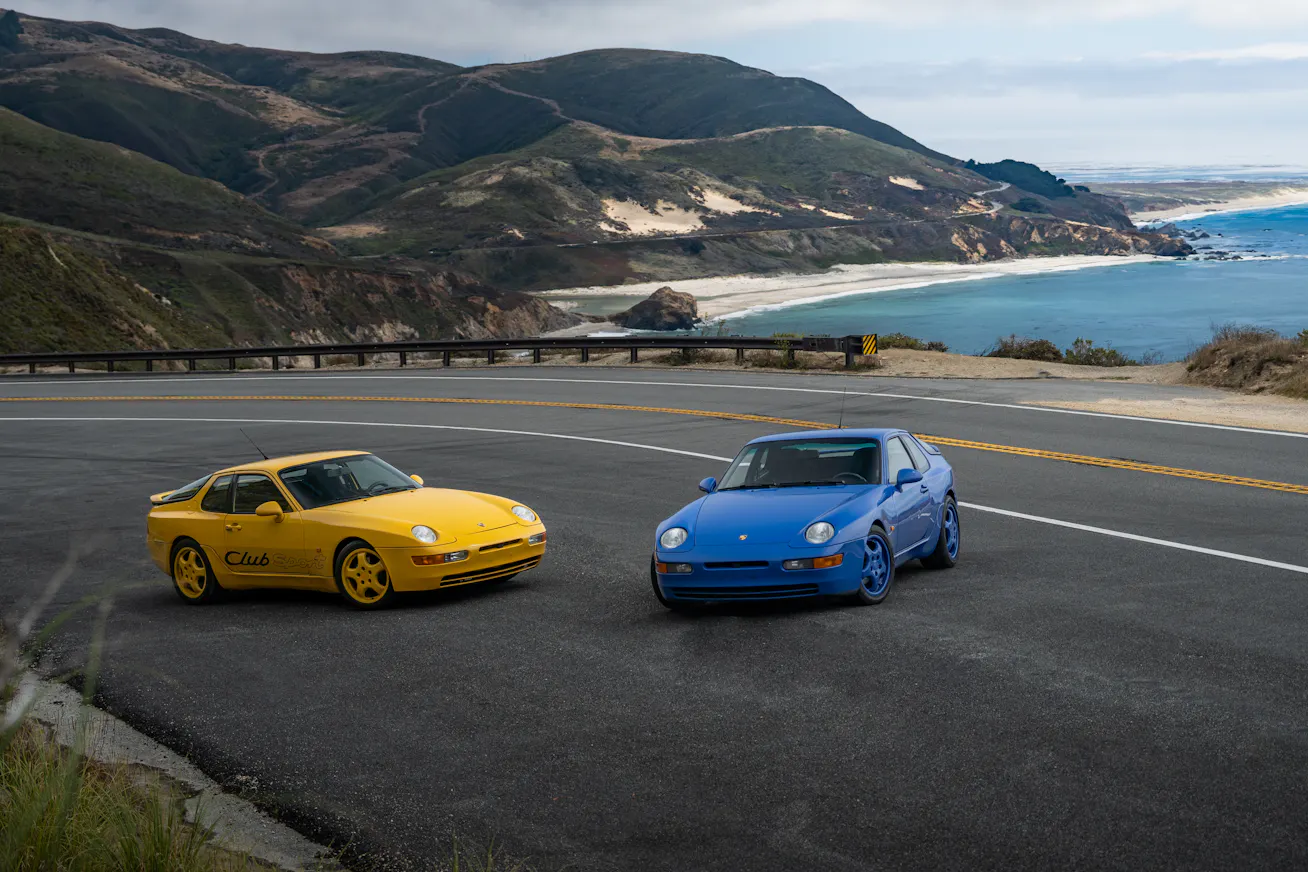
Porsche 968 Club Sport fact file Lightweight, driver-focused version of the Porsche 968Based on the final transaxle sportscar from PorschePowered by a 3.0-litre four-cylinder enginePower output of 240 PS (236 hp)Reduced equipment and lower weight than the standard 968Tuned for sharper responses and more focused handlingTop speed of around 257 km/h (160 mph)0-100 km/h (0-62 mph) in approximately 6.3 secondsColours: Maritime Blue, Guards Red, Speed Yellow, Black, and Grand Prix WhiteWhat is the Porsche 968 Club Sport?A little over a decade after it launched a rear-engined sportscar that has become an automotive legend, Porsche introduced a model that would herald a new era for the makers of the 911. In 1976, the 924 was revealed – the first of what is known as the ‘transaxle’ generation. In contrast to the 911, the 924 and its later transaxle siblings – the 928, 944 and 968 – featured engines in the front and transmission at the rear. Just like the 911, their optimised weight distribution and avant-garde design would leave a significant mark on the automotive engineering of an era in which there was a growing emphasis on comfort and refinement.Towards the end of the transaxle generation in the early 1990s, Porsche unveiled a sportscar that leant on the benefits of the last of the front-engined models (at the time) as well as leveraging the company’s motorsport heritage and lessons learned from the perpetual development of the 911. That car was the 968 Club Sport.Developed as a pared-back, performance-led take on the standard 968, the Club Sport was a distillation of the transaxle philosophy into its purest form. It was, in essence, lighter and delivered a sharper response that created an unfiltered connection between car and driver. Today, its reputation as an authentic, usable, fun-filled and frills-free classic sportscar have made it an increasingly desirable choice among Porsche collectors and enthusiasts alike.Based on the final Porsche transaxle model produced, the 968 Club Sport is a pared-back, performance-led version that has become a highly covetable classic Porsche Photo: Alex Harkey/@aloptics11When was the 968 Club Sport launched?The Porsche 968 Club Sport went on sale in 1993, two years after the standard 968 had entered production, having been unveiled to the public at the Paris Motor Show in October 1992. The 968 arrived during the final phase of the Porsche transaxle era, which had begun with the 924 and continued with the 944 and 968.The 968 Club Sport was produced at the Porsche HQ in Zuffenhausen. On launch, the 968 Club Sport went on sale in Europe, with the UK and Germany being its primary markets. It was never officially sold in the US, although the car has since become a very popular import for North American enthusiasts.Its limited colour palette on launch – Maritime Blue, Guards Red, Speed Yellow, Black, and Grand Prix White – was a deliberate decision by Porsche to reflect the motorsport intent of the 968 Club Sport, emphasising the kind of bold hues that so often dominate the racetrack. Many examples feature ‘Club Sport’ decals in black, red or white on the lower section of the doors in a style similar to the ‘Carrera’ decal on the legendary 911 2.7 RS. Its colour-coded 17-inch Cup design wheels also matched the bodywork colour. Then, as now, the 968 cuts an impressive figure. The 968 Club Sport – which first went on sale in 1993 – features a 3.0-litre, naturally-aspirated, water-cooled engine that at the time was the largest four-cylinder engine fitted to any production car Photo: Alex Harkey/@aloptics11What are the technology and design highlights of the 968 Club Sport?With lessons learned from its production of the three prior transaxle models, the standard 968 was already considered one of the most well-balanced and poised sportscars that Porsche had built to date. The 968 Club Sport retained the core engineering characteristics with power coming from a 3.0-litre, naturally aspirated, water-cooled four-cylinder engine. At the time, this was the largest four-cylinder engine fitted to any production car. Like its 968 sibling, the 968 Club Sport used the Variocam variable valve timing system – Porsche engine technology that delivered significant mid-range torque and a linear, responsive nature.The front-engined, rear gearbox-mounted transaxle of the 968 Club Sport meant that it boasted a beautifully balanced weight distribution. It was a configuration that, combined with MacPherson strut front suspension and a multi-link rear set-up, led to composure and confidence on road or track.Elsewhere, changes were subtle but were incorporated with purpose. Outwardly, the exterior was minimally altered from the standard 968 – notably those door decals, the addition of a small rear spoiler and removal of the rear wiper (the latter for weight-saving purposes). The Club Sport also wore lighter forged alloy wheels and sat lower than the standard 968, with stiffer suspension settings. Its motorsport aspirations were reflected in strong braking performance thanks to large, ventilated discs. Unlike the imposing figure cut by, for example, the 911 Turbo, the aesthetic of the 968 Club Sport was understated and functional rather than overtly aggressive – although its performance would suggest otherwise.The pair of 968 models featured here are painted in two of the original Porsche 968 Club Sport colours – Speed Yellow and Maritime Blue. Others available were Guards Red, Grand Prix White and Black Photo: Alex Harkey/@aloptics11 • Cars courtesy of Animoya GarageWhat are the unique features of the 968 Club Sport?The 968 Club Sport was less about what was added to the base model and more what was taken away. It was done with weight reduction in mind in order to help improve performance. Sound insulation was removed, as were the rear seats, while the electrically-adjustable front seats of the 968 were replaced by single-piece Recaro bucket seats with a fixed-back that matched the colour of the exterior paint – a notable standout of the 968 Club Sport.The stripping away of non-essentials and the commitment to weight-saving continued with the removal of the electric windows, radio, central locking and air conditioning. Even the rear wiper was omitted. Fabric door pulls replaced handles, thinner glass was used as well as lightweight carpeting.The steering wheel was a simple three-spoke design, while the driving position was notably even more driver-focused – you sat low and close to the controls, further enhancing the motorsport credentials of the 968 Club Sport. When all of this was totted up, it meant a huge weight saving of around 100 kg (220 lbs) compared to the standard 968. This was a road car built for trackdays by people who knew all about what was required for optimal circuit driving.The 968 Club Sport was never officially sold in the US, which has since helped enhance its popularity in the American classic car market Photo: Alex Harkey/@aloptics11How fast is the 968 Club Sport?This low weight allied to the powerful punch of the torquey, 3.0-litre, flat four-cylinder engine translated to impressive performance for the time. Power output was 240 PS (236 hp) while it could reach 0-100 km/h (0-62 mph) in approximately 6.3 seconds, with a top speed of around 257 km/h (160 mph).But the 968 Club Sport was much more than just straight-line speed. Throttle response was immediate and engaging, its ample torque helping you pull cleanly from low revs while that low weight, so precisely distributed, and fine chassis encouraged the driver to explore its limits with confidence. It’s no wonder that at the time Walter Röhrl – two-time World Rally Champion and a Porsche brand ambassador since 1993 – described the 968 Club Sport as the best-handling car that the company had made to date.How much is a 968 Club Sport?For many years the Porsche 968 Club Sport was something of a bargain for buyers looking for an affordable way to own a classic, track-focused Porsche sportscar. However, interest in it has exploded more recently with the growing appreciation among a section of enthusiasts and collectors for cars without many of the driving aids we expect from our new cars today.In the UK, a Maritime Blue example that was owned by Porsche Stuttgart between 1992-1996 was being sold through a well-known specialist dealer in early 2026 for a price of £49,995 (around €57,000 or $67,000), highlighting the demand for original, low-mileage cars. The Club Sport was never officially sold as new in the US, which has only helped to enhance its popularity there in the resale market. In late 2024, another original example in Maritime Blue with 15,334 miles (24,678 km) on the clock sold for $80,000 in the States (around €76,500 or £60,000).However, most of the cars currently for sale in the main markets such as Germany, UK and the US go for much less. That being said, when it comes to market values, the price trend is very much on an upward trajectory.Over the years, the 968 Club Sport has been described by the motoring press as an “exceptional driving experience” and been praised for its great handling and perfect balance Photo: Alex Harkey/@aloptics11How many 968 Club Sport were made?According to figures from the world’s largest official Porsche club, the Porsche Club of North America, it’s believed that 1,538 Club Sport models were made, making it a rare car for enthusiasts to seek out. Production began in late 1992 and ended in 1995, when production of the 968 model range was halted. As mentioned, it never went officially on sale in the US, with most examples sold in Europe.What the automotive press says about the 968 Club Sport?The world’s car press both at the time and as well as today have been effusive in their praise for the 968 Club Sport, with the UK’s esteemed Performance Car magazine naming it Performance Car of the Year in 1993.Here’s a selection of praise from some of the most renowned publications and websites:“The 968 Club Sport will always be a high spot for combining great handling and a sweet four-cylinder engine”Evo, UK, June 2019“We hadn’t seen this coming – a four-cylinder Porsche that was one of the finest-handling sports cars that any of us had driven. Perfectly balanced, easy to slide and recover (the term drifting hadn’t been coined back then)”Autocar, UK, May 2020“Among the transaxle Porsche 968 models, the Club Sport is the rarest and perhaps the most desirable. With 240 hp and reduced weight, it fully exploits the strengths of its three-litre, four-cylinder engine. A classic”Auto Bild, Germany, June 2025“In tight corners or fast bends, the 968 CS feels unbeatable. Even more so than the standard 968, the CS offers an exceptional driving experience”Sport-Auto, France, 1993Special thanks to Alex Harkey/@aloptics11 for the images. Cars courtesy of Animoya Garage
What are Porsche Ceramic Composite Brakes and how do they work?
Porsche Ceramic Composite Brakes (PCCB) were developed to offer drivers the very best in stopping power. This is how they work and why Porsche continues to refine brake technology for road and track
Read more
1,000 hp heroes – the Porsche cars with four-figure power
From legendary Porsche race cars to electric SUVs, these are the Porsche cars that have broken the 1,000 hp barrier
Read more
The Porsche transaxle era: the 924, 928, 944 and 968
Discover the story behind the four Porsche transaxle models – the 924, 928, 944 and 968 – which, from the mid 1970s to mid 1990s, wrote an exciting new chapter in the company’s story
Read more