The Porsche 911 Targa: from ‘safety cabriolet’ to style icon
How Porsche ingenuity created one of the most distinctive 911 variants of all
Copy link
Share on Facebook
Share on X
Share on LinkedIn
The 911 is, in so many ways, a unique sportscar – and that’s certainly true of the 911 Targa. Here’s how Porsche cleverly created an automotive design classic
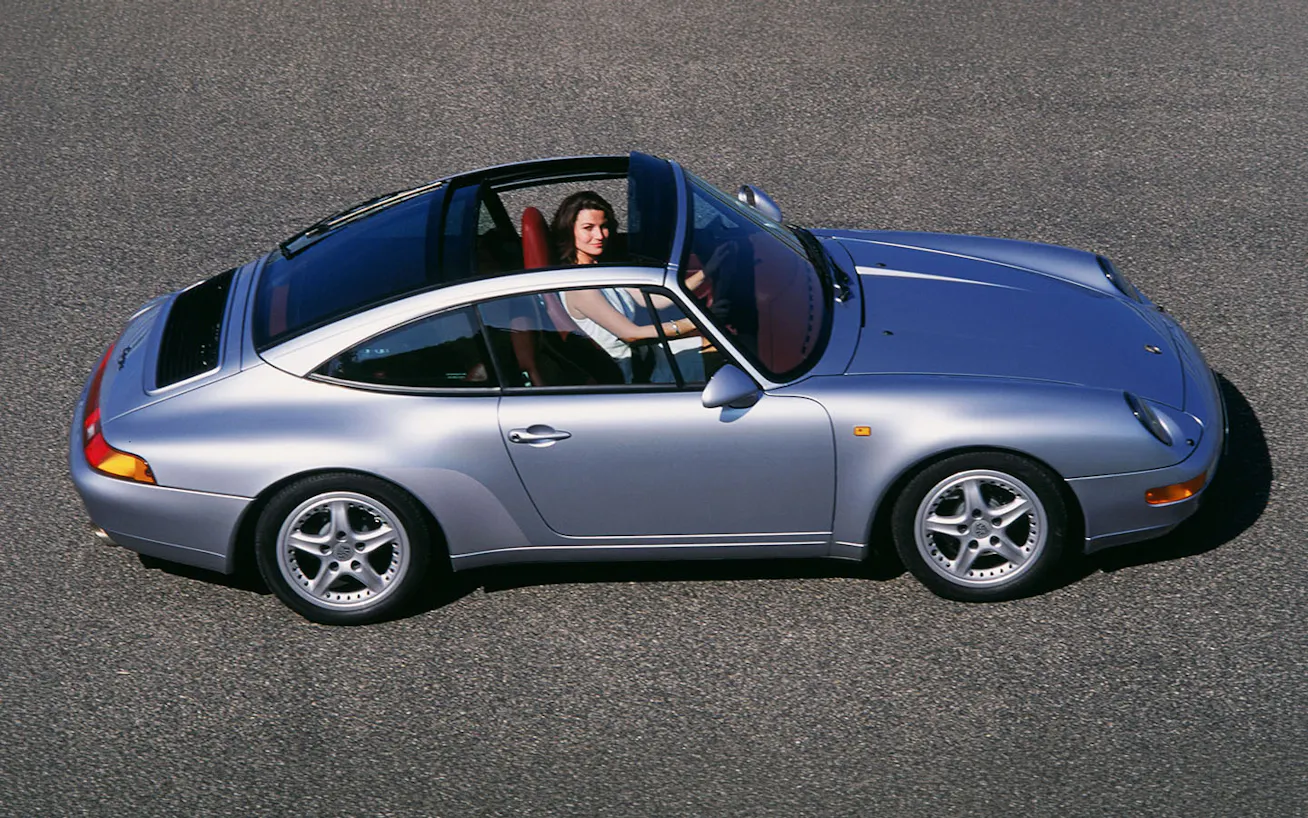
Porsche 911 Targa: the unique open-top sportscar• The first-ever 911 Targa made its public debut in 1965 • Its named after the famous Sicilian stage race, the Targa Florio • The trademark Targa roll bar was designed as a safety feature but also gave it a striking identity• The current model – the type 992.2 version – features an automatic retractable roof that unfolds in under 20 secondsFor more than 60 years, the Porsche 911 has been the sportscar that refuses to play by the rules. From its rear-engined layout to its 2+2 seating format and unmistakable design, it’s an example of Porsche doing things its own way. And if there’s one model in the 911 range that epitomises this confident approach then it’s the 911 Targa. What started as the world’s first ‘safety convertible’ has become a core model in the range and an enduring icon for the past 60 years. The origin story of the 911 Targa is one of pure creativity. When introducing the 911 in 1963, Porsche understood that its customers would be interested in an open-top version, especially since the predecessor to the 911 – the 356 – had always been popular in cabriolet form. And so it began working on a solution.An example of a first-generation Porsche 911 S 2.2 Targa. The Targa was in part a response by Porsche engineers to the challenge to create a ‘safety convertible’ – an open-top model that would meet strict driving legislation in the US during the mid-1960s Photo: Porsche911 Targa: the early yearsWhen Porsche started working on a drop-top 911, it coincided with tighter safety regulations being introduced in the USA. There were even suggestions that convertible cars would be outlawed altogether by authorities in the US due to their perceived vulnerability in a rollover incident. It was this dilemma that forced engineers at Porsche to think outside the box. It was a combination of necessity and lateral thinking that led the company to come up with a unique solution – a fixed roll bar. As is so often the case at Porsche, the inspiration for this came from motorsport. Metal rollover hoops, which protected drivers should a car overturn, had been used in various racing formulas since the 1950s and were already mandatory for race cars competing in the Indy series from 1959. When Porsche adapted this technology for the road, it created both a vital safety feature and a distinctive design signature for its new open-top 911. The stainless steel bar, with its distinctive vertical grooves on each side of the B-pillar, combined with a ‘wraparound’ rear window to give the 911 Targa a look like no other car on the road. The Targa – which made its public debut at the Frankfurt Motor Show in 1965 – took its name from the Targa Florio, the notoriously challenging Sicilian road race won regularly by Porsche cars during the 1950s and 1960s. The first three generations of the 911 Targa – like this 1977 Porsche 911 2.7 Targa (G Series) – had a standout feature in the form of a stainless steel ‘wraparound’ roll bar on which the Targa name was emblazoned Photo: PorscheThe Targa: designed from the start for the joy of open-top motoring Thanks to its removable roof panel and the absence of a C-pillar, the 911 Targa allowed those on board to enjoy either open-air motoring or an unusually light, open feel with the roof still in place. Initially available only with a folding plastic rear screen, a fixed (and heated) glass rear window was added as an option in 1967 and became a standard feature the following year. This classic set-up continued through the next two 911 generations, although the option of a black finish – rather than brushed stainless steel – for the Targa bar was available from the G Series model of 1973 onwards. Even after the first full cabriolet version of the 911 – the 911 SC – was introduced in 1983, the Targa continued to be an integral part of the model range. Ever since, the 911 cabriolet and Targa have sat side-by-side in the model line-up, making it one of the few cars in the world to offer two distinct open-air body styles. Yet another example of the willingness of Porsche to do things its own way. The cars of the middle era of the Targa – like this 911 Targa 3.6 (type 993) – ditched the visible roll bar of those earliest versions, but it would later return with the most recent models Photo: PorscheThe revolutionary glass roof of the 1990s-era 911 TargaIn 1995, the 911 (type 993) arrived and the Targa entered a new era. Its new roof concept consisted of a seamless sweep of glass from the windscreen to the rear deck, with a centre section that slid back electrically to give open-air motoring at the flick of a switch. Fixed side sections gave rollover protection, while still retaining the classic 911 flyline. The type 996 generation of the 911 Targa – introduced in 2001 – used the same concept but engineers at Porsche added an opening rear window that allowed easy access to the rear seats and luggage area. The 911 has always been about evolution, evidenced by the type 997 Targa model, which introduced four-wheel drive as standard and a lighter glass roof for optimum handling and performance.The current Targa models – like this 911 Targa 4S (type 992.2) – feature a highly sophisticated automatic roof system that takes under 20 seconds to activate Photo: PorscheEight generations in – and more refined than everThe seventh-generation of 911 – the type 991 – saw a return to the iconic Targa roll bar look of its early incarnations, complete with wraparound rear window. While the design referenced 911 models of the past, the technology was cutting-edge. The press of a button initiated a beautifully balletic 19-second sequence where the entire rear window section lifted up and the roof panel slid gracefully away. The roof system on the current generation of 911 Targa (as of June 2026) – first the type 992.1 and now the 992.2 – has further evolved, making it the most refined version available yet. Six decades after it was introduced, the 911 Targa remains a shining example of relentless Porsche innovation focused on pure driver enjoyment. And all as beautifully engineered – and wilfully different – as it has ever been.
How Ferdinand Porsche invented – and Porsche reinvented – the hybrid car
From the Semper Vivus and 918 Spyder to today’s 911 T-Hybrid models, discover how Porsche turned electrification into a performance technology
Read more
How Hedley Studios reinterpreted the Porsche 550 at 80% scale and 100% electric
Hedley Studios spent years studying the Porsche 550 to understand what made it special. Founder Ben Hedley explains how the team recreated its design, engineering and driving character at 80 per cent scale
Read more
What is Formula E and how fast are the cars?
Formula E is one of motorsport’s most entertaining series. With Porsche entering works and customer teams in the all-electric championship, find out all about its hi-tech race cars
Read more