1,000 hp heroes – the Porsche cars with four-figure power
From CanAm race cars to electric performance at the F.A.T. Ice Race
Share article
Copy link
Share on Facebook
Share on X
Share on LinkedIn
From legendary Porsche race cars to electric SUVs, these are the Porsche cars that have broken the 1,000 hp barrier
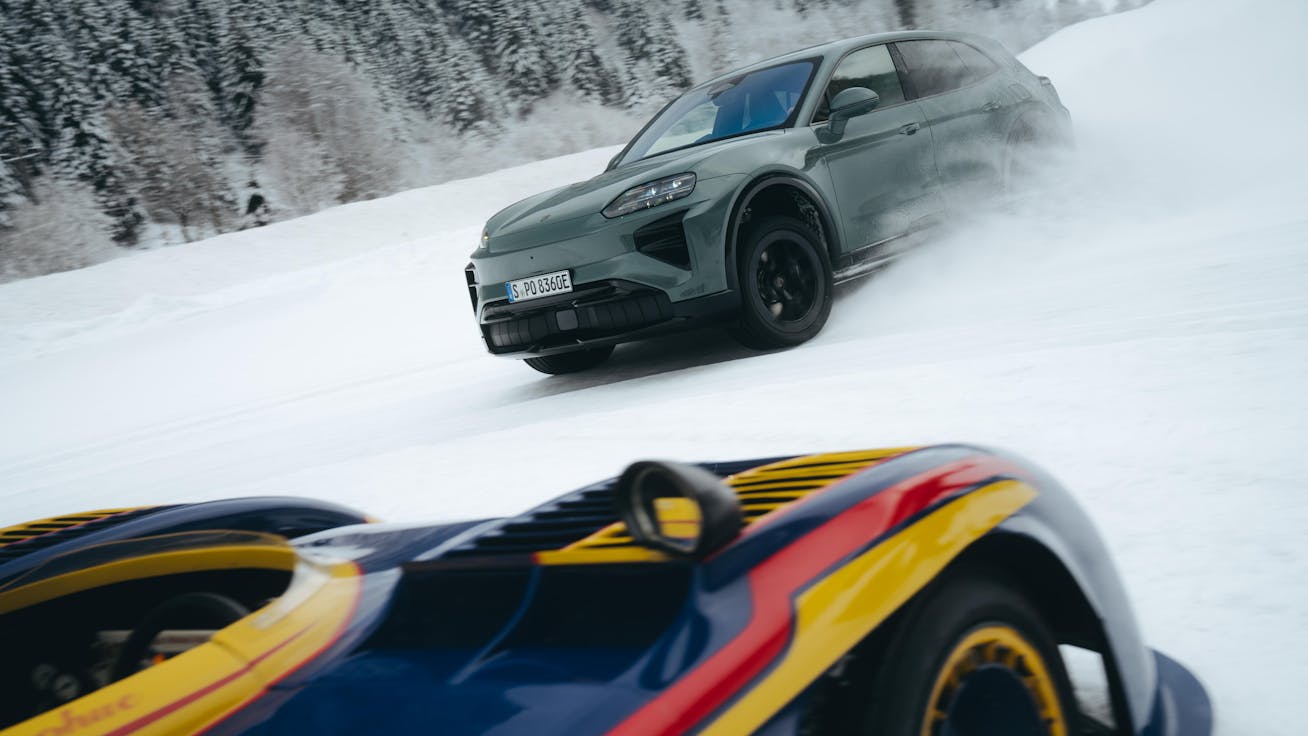
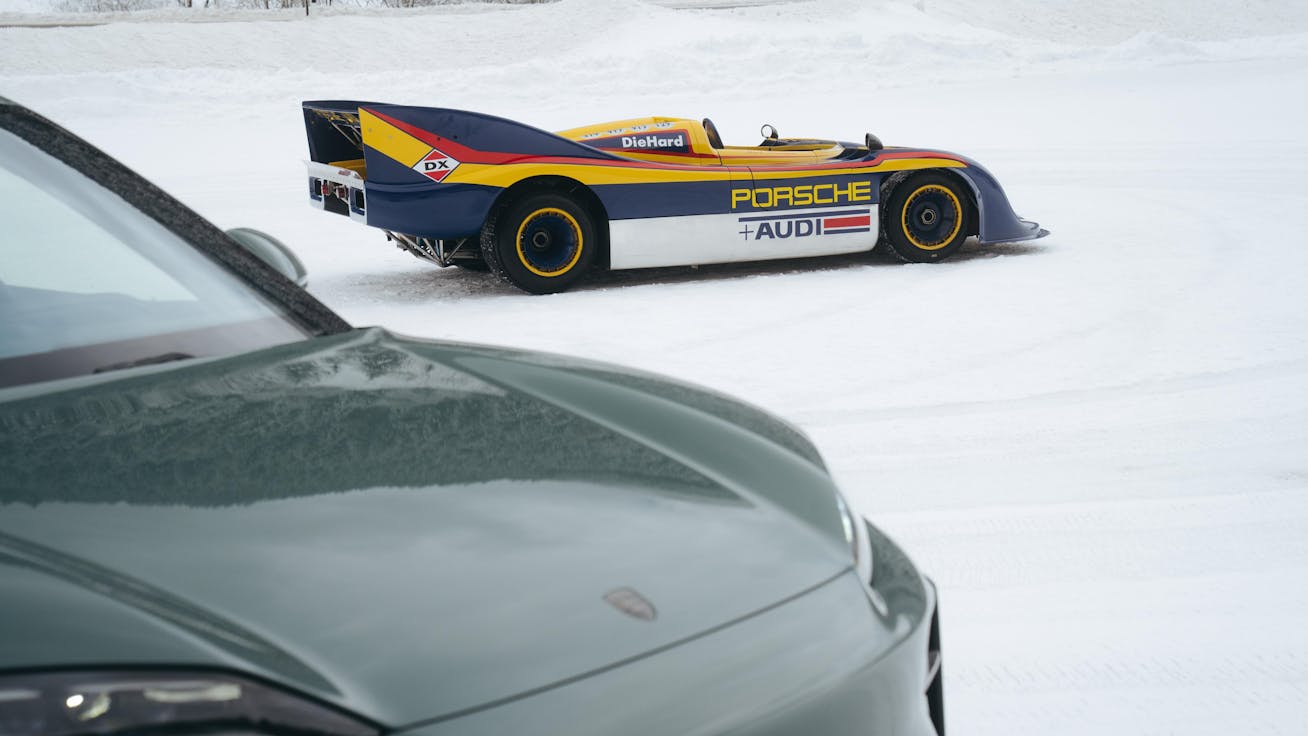
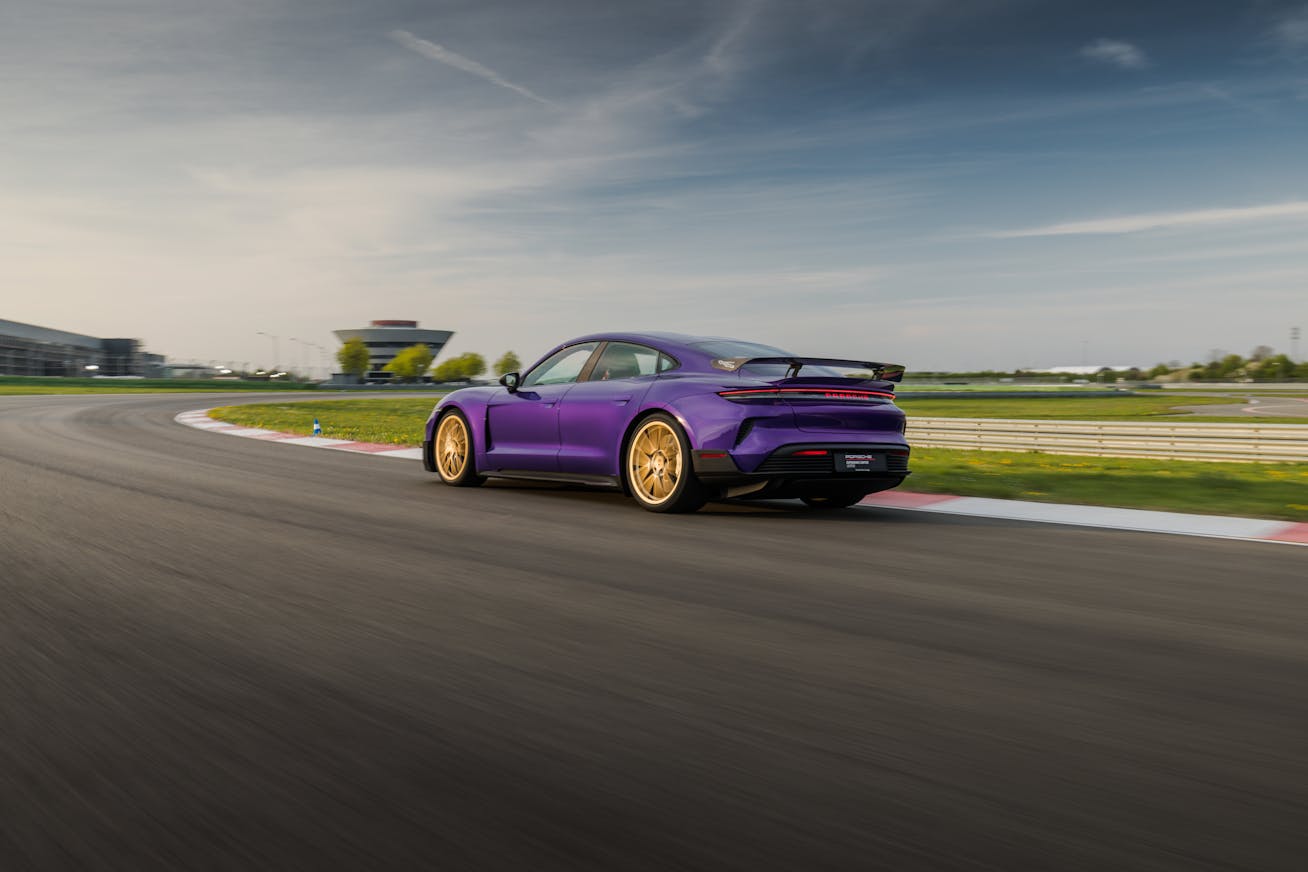
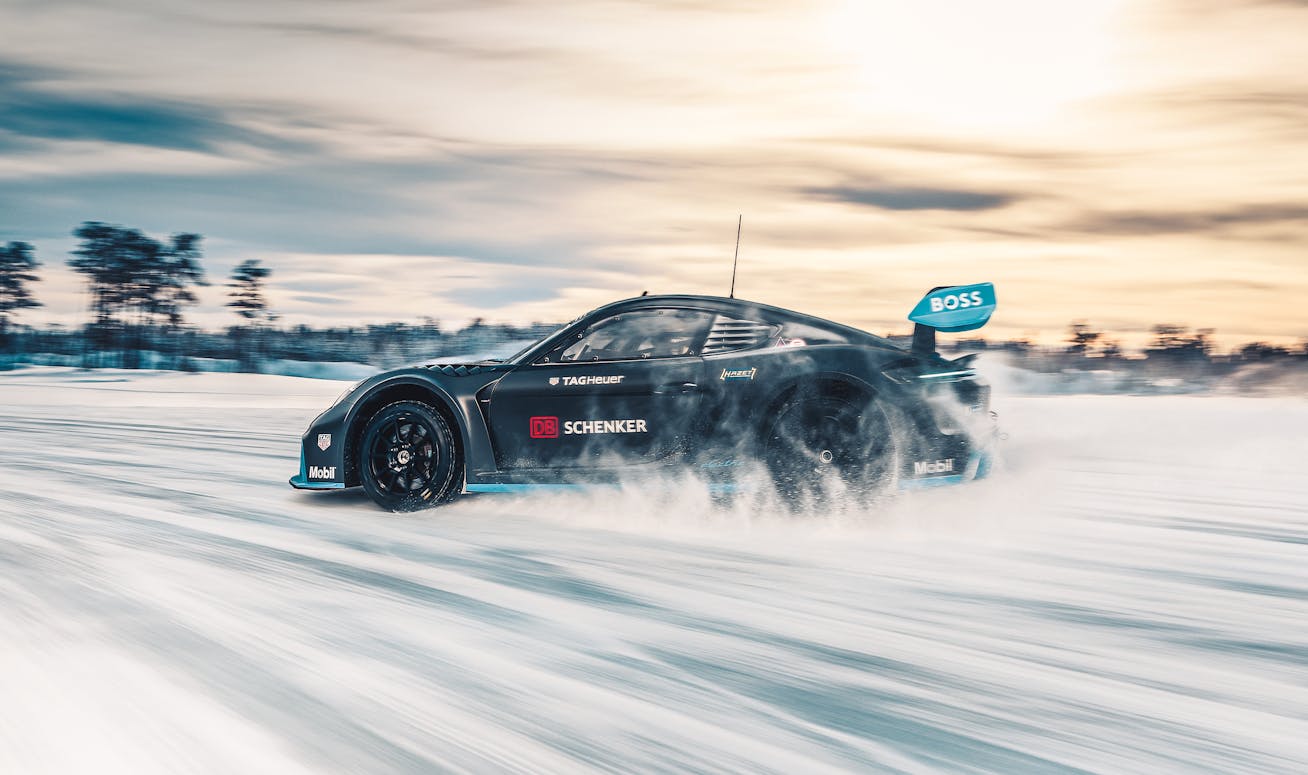
The 2026 F.A.T. Ice Race in Zell am See, Austria, brought together two icons of Porsche performance. One is a legend of motorsport. The other an SUV that rewrites the performance rulebook. On paper, they are worlds apart, but they do share one tiny – well, huge actually – thing in common: they both exceed 1,000 hp. This is the story of the Porsche cars that have taken power to the ultimate level. This is the Porsche 1,000 hp club.Discover the 15 most powerful Porsche road cars everPorsche Cayenne Electric • the most powerful production Porsche everThe new Porsche Cayenne Electric is not only the most powerful production Porsche ever made, it sets a new benchmark for performance SUVs Photo: PorscheOn the snow-covered tracks at the F.A.T. Ice Race, the Cayenne Electric wowed fans with its dynamic combination of grip, power and handling. It’s the most powerful production Porsche ever made. In Turbo form, the all-electric SUV delivers up to 850 kW (1,156 PS/1,172 hp) with Launch Control and 1,500 Nm of torque. Yet despite its roomy and comfortable SUV dimensions, the performance is outstanding. The dash from 0-100 km/h (0-62 mph) takes 2.5 seconds, with 0-200 km/h (0-124 mph) taking just 7.4 seconds, with a top speed of 260 km/h (162 mph).This is made possible thanks to a powerful new electric drive system, as well as direct oil cooling of the electric motor on the rear axle of the Turbo version for greater output and efficiency. The Cayenne Electric pairs this exhilarating power with all-wheel drive and advanced electric drive technology, making it not only the most potent Porsche production car but also one of the most versatile.Despite its prodigious performance, the Cayenne Electric is designed to go the distance. It’s available with up to 400 kW of charging power and as much as 642 km (399 miles) of range. The Cayenne Electric can also recover up to 600 kW of energy (typically lost through braking) – that’s Formula E levels of energy recuperation.Read more about the new Porsche Cayenne ElectricPorsche 917/30 CanAm Spyder • the original 1,000 hp PorscheThe 917/30 was a CanAm racing car that dominated 1970s racing with its prodigious power and performance Photo: PorscheSeeing the 917/30 and the Cayenne Electric pictured together at the F.A.T. Ice Race might seem incongruous, but they are two cars that are united by a legacy of Porsche innovation and performance. The Porsche 917/30 hails from a golden age of motorsport. Long before road cars approached four-figure power figures, Porsche had already crossed the hallowed 1,000 hp mark in racing. Built for the North American CanAm series in the early 1970s, the 917/30 featured a 5.4-litre, twin-turbo, flat-12 engine producing around 1,100 PS (1,115 hp) in race form. However, in tests with the boost dialled up to the max, the 917/30 could go far higher. Unlike most modern racing series, which are governed by balance-of-performance rules, CanAm back then had virtually no limits on engine output, allowing Porsche engineers to pursue the ultimate levels of power.Subsequently, the 917/30 dominated the CanAm championship. Driven by Mark Donohue, a 917/30 won six of eight races in the 1973 Can-Am championship and brought home the title. Its performance was so overwhelming that it effectively marked the end of the series in its original form, as organisers struggled to rein in escalating speeds and costs.However, in August 1975, the 917/30 gave one last thrilling performance: on the 4.28km-long (2.7 miles) Talladega Superspeedway in Alabama, Donohue’s average speed of 355.86 km/h (221.12 mph) set a new world record that stood for 11 years. Fitted with new ‘charge-air coolers’ for the first time, the 917/30 bowed out with 1,230 PS (1,247 hp).The 917/30 was much more than just raw power. It pioneered aerodynamic development that produced enormous downforce, as well as adjustable turbo boost, allowing drivers to tailor power delivery during a race to spare the engine and save fuel. Even by modern standards, the power, acceleration, top speed and endurance of the 917/30 remain benchmarks in performance.Read more about the Porsche 917Porsche Taycan Turbo GT • electric on road and trackAt home on the racetrack or the road, the Taycan Turbo GT is the most powerful version of the all-electric Taycan Photo: PorscheThe Porsche Taycan Turbo GT is the flagship of the Taycan range. There are currently two versions: the Taycan Turbo GT and the Taycan Turbo GT with Weissach package. Whichever flavour you choose, both offer exceptional performance on road and track.The two cars have 1,034 PS (1,048 hp) using Launch Control on overboost. The result is – no exaggeration – breathtaking performance. The Taycan Turbo GT can accelerate from 0-100 km/h (0-62 mph) in 2.3 seconds, while the Taycan Turbo GT with Weissach package arrives at that mark slightly quicker at 2.2 seconds. The Taycan Turbo GT has a top speed of 290 km/h (180 mph) while the Taycan Turbo GT with Weissach package rises to 305 km/h (190 mph).They also feature ‘Attack Mode’, which is part of the Sport Chrono package. At the press of a button, an additional 120 kW of power is delivered for 10 seconds. It’s similar to the push-to-pass function that the Porsche 99X Formula E cars use.Read more about the Taycan Turbo GTPorsche 919 Hybrid Evo • the Nürburgring’s fastest carThe Porsche 919 Hybrid Evo remains the fastest car to ever lap the Nürburgring Nordschleife Photo: PorscheBased on the Le Mans and WEC championship-winning 919 Hybrid race car, the Evo version removes some of the restrictions that govern its performance in racing series to unleash 1,160 PS (1,176 hp). In June 2018, the 919 Hybrid Evo set the record for the fastest lap of the Nürburgring Nordschleife race circuit, with Le Mans legend Timo Bernhard behind the wheel. Lapping the famous 20.832 km-long (12.94 miles) circuit in Germany in 5 minutes 19.55 seconds at an average speed of 233.8 km/h (145.3 mph), it set a record that still stands today (as of January 2026). The car achieved a top speed of 369.4 km/h (229.5 mph) on the same lap.Weighing only 849 kg, the Evo features active and enhanced aerodynamics and produces 50 per cent more downforce than the WEC model.Porsche GT4 e-Performance • the future of race carsThe Porsche GT4 e-Performance is an experimental all-electric racing car that offers an insight into the potential of future Porsche race cars Photo: PorscheThe Porsche GT4 e-Performance could be a hint at what racing cars of the future could look like. This experimental all-electric racing car features electric motor and battery technology from the Mission R concept study and is actively being tested in various national and international events.Based on the 718 Cayman GT4 Clubsport chassis, but with all-wheel drive and more than 6,000 unique parts, it delivers up to 1,088 PS (1,103 hp) in qualification mode, giving you the power you need to complete a very fast lap. But the power can also be turned down to 612 PS (620 hp) to suit sprint-race formats like those in the Carrera Cup. That’s enough to last a 30 minute-long intensive race, but the battery can be charged from 5 to 80 per cent in just 15 minutes.
Consumption and emission informationTaycan Turbo GT with Weissach Package
(WLTP): Electric energy consumption combined: 20.8 – 20.6 kWh/100 km; CO₂ emissions combined: 0 g/km; CO₂ class: .
Taycan Turbo GT
(WLTP): Electric energy consumption combined: 21.2 – 20.5 kWh/100 km; CO₂ emissions combined: 0 g/km; CO₂ class: .
Cayenne Electric
(WLTP): Electric energy consumption combined: 21.8 – 19.7 kWh/100 km; CO₂ emissions combined: 0 g/km; CO₂ class: .
Cayenne Turbo Electric
(WLTP): Electric energy consumption combined: 22.3 – 20.3 kWh/100 km; CO₂ emissions combined: 0 g/km; CO₂ class: .
Build your new Cayenne Electric
Configure yours
Continue reading
A guide to the Porsche 968 Club Sport. Why this lightweight driver’s car is gaining cult status
Seen by many experts as the high-point of the Porsche transaxle era, this 3.0-litre sportscar combines lightweight construction with stunning handling and performance
Read more
What are Porsche Ceramic Composite Brakes and how do they work?
Porsche Ceramic Composite Brakes (PCCB) were developed to offer drivers the very best in stopping power. This is how they work and why Porsche continues to refine brake technology for road and track
Read more
The Porsche transaxle era: the 924, 928, 944 and 968
Discover the story behind the four Porsche transaxle models – the 924, 928, 944 and 968 – which, from the mid 1970s to mid 1990s, wrote an exciting new chapter in the company’s story
Read more