A guide to driving at Le Mans, with champion race driver, Richard Lietz
The six-times class winner at the 24 Hours of Le Mans on the world’s greatest endurance race
Share article
Copy link
Share on Facebook
Share on X
Share on LinkedIn
The Porsche Track Experience helps participants achieve their racing dreams. Here, multiple 24 Hours of Le Mans winner, Richard Lietz, reveals the secrets to conquering the Circuit de la Sarthe
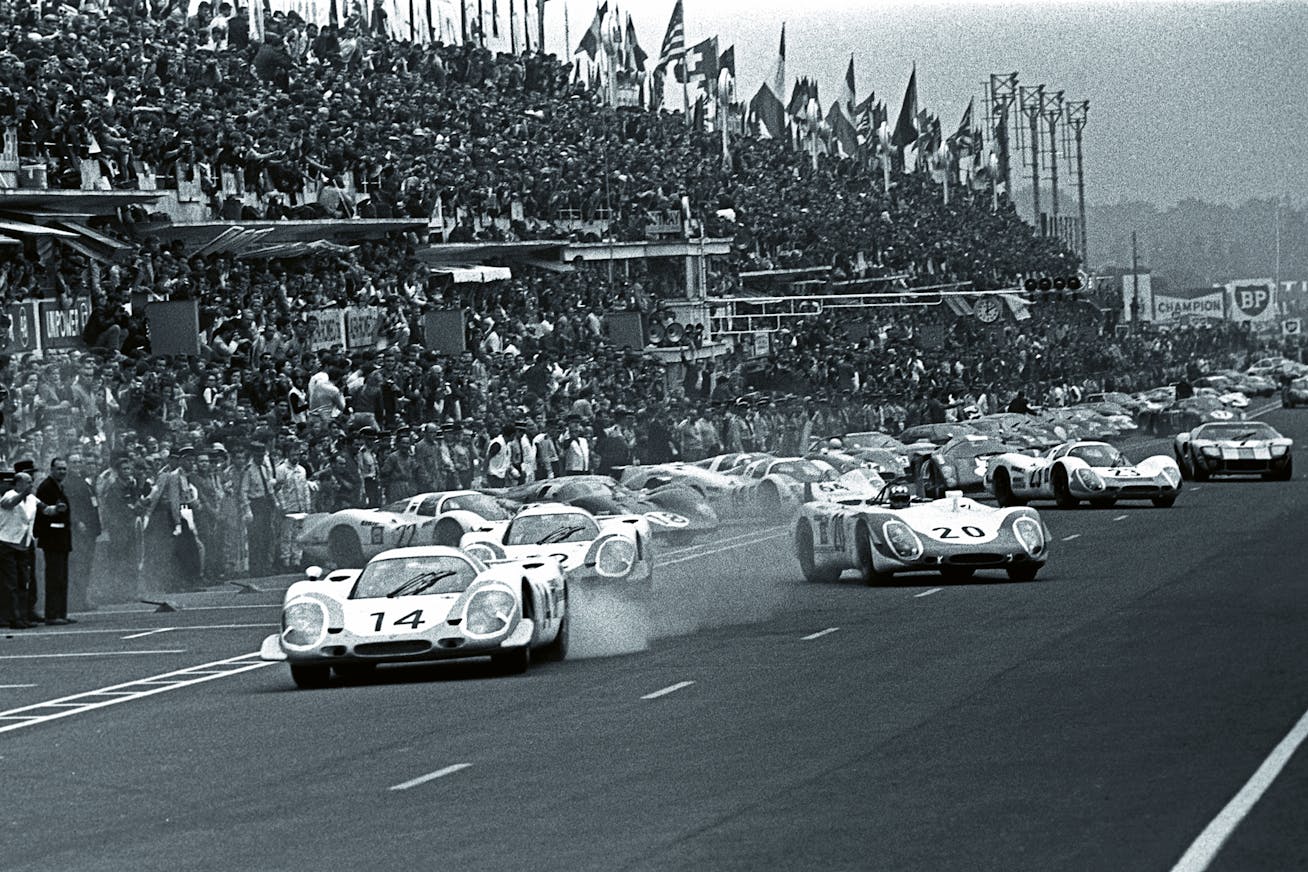
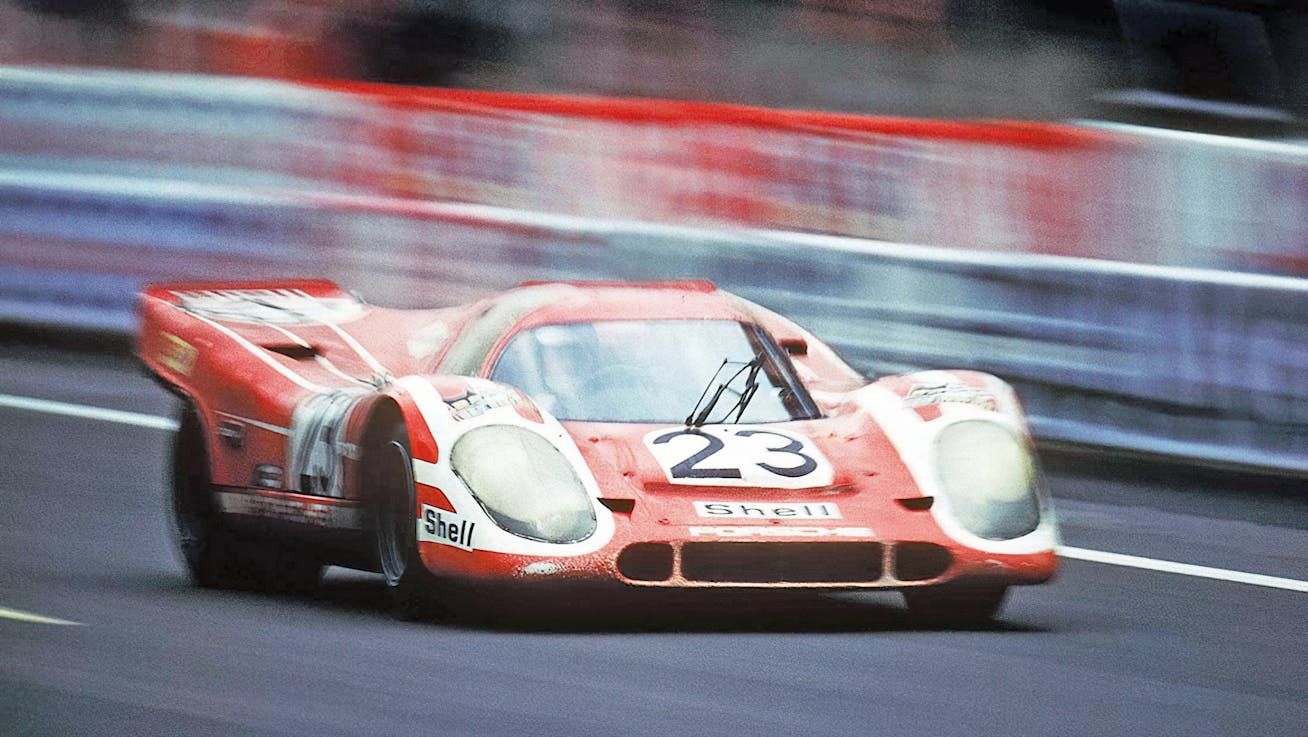
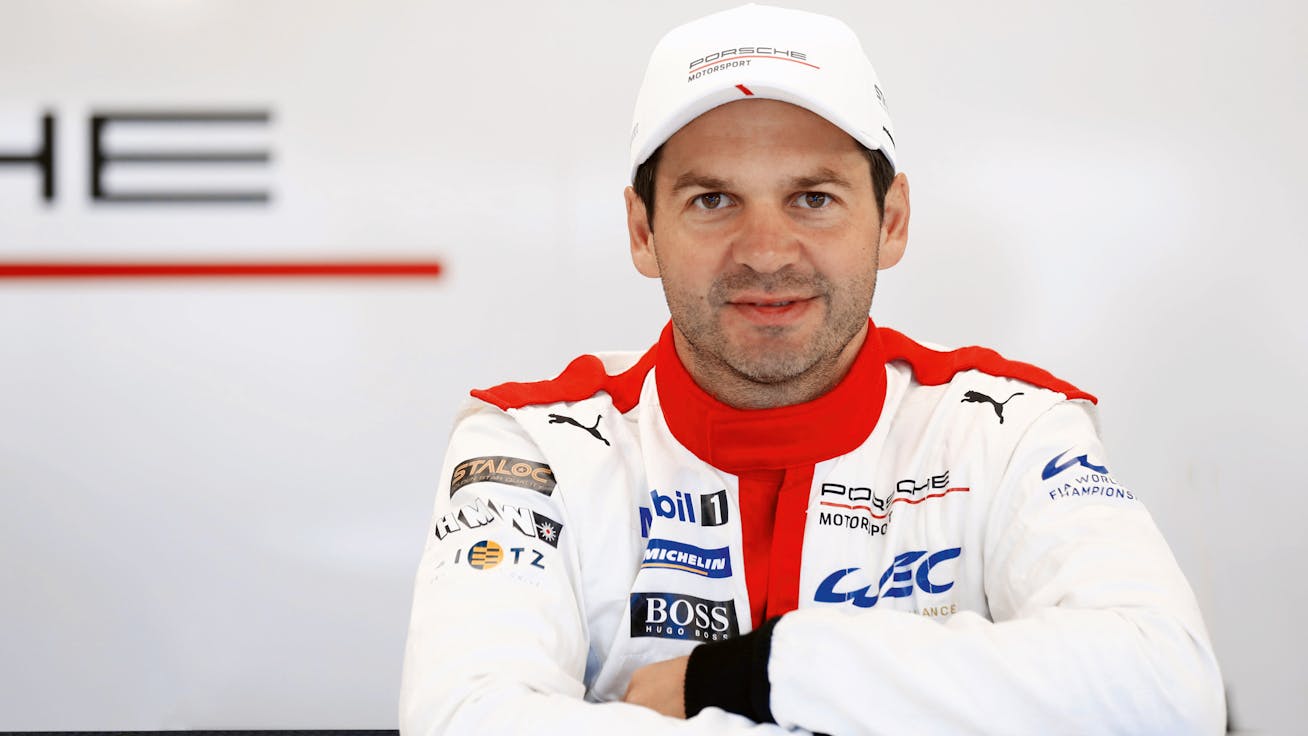
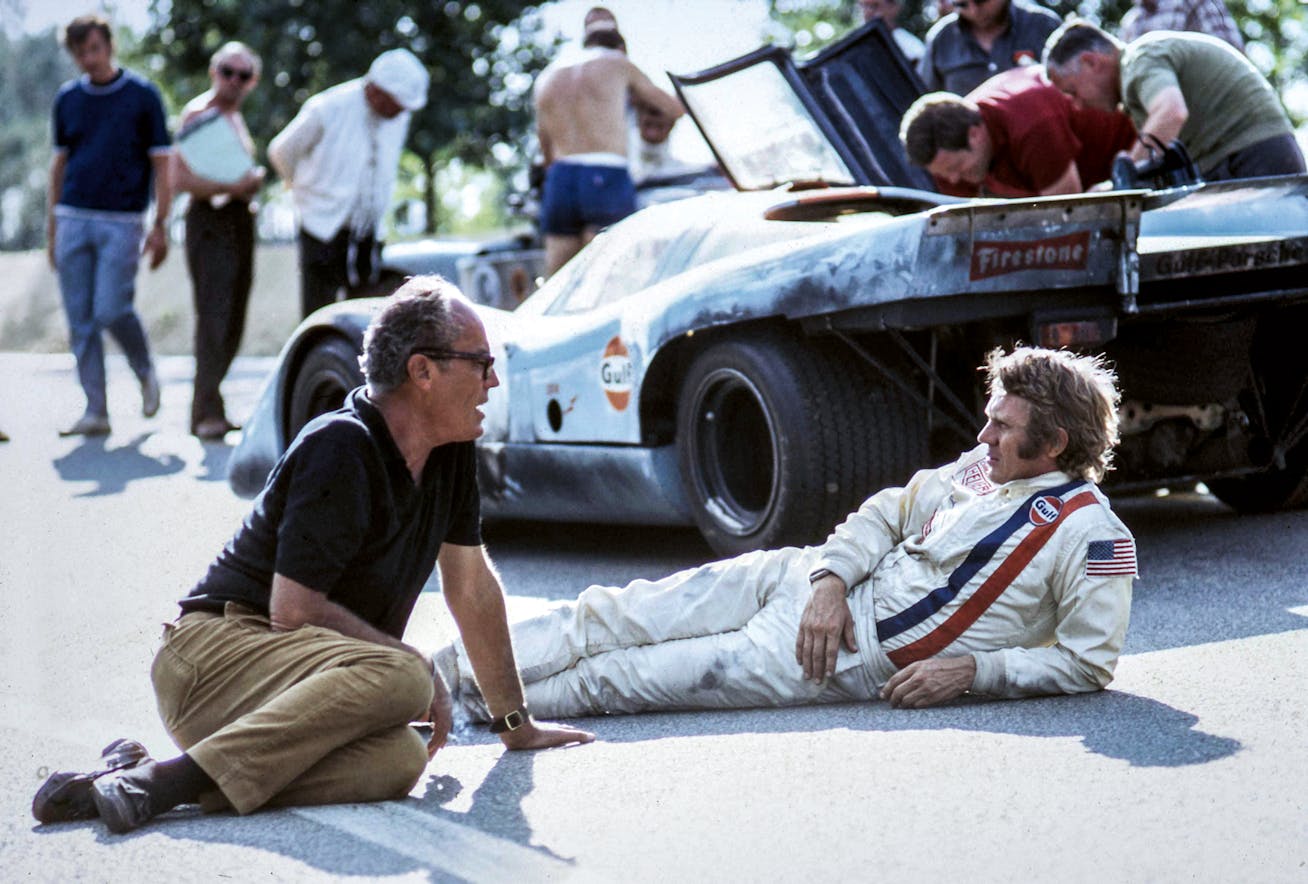
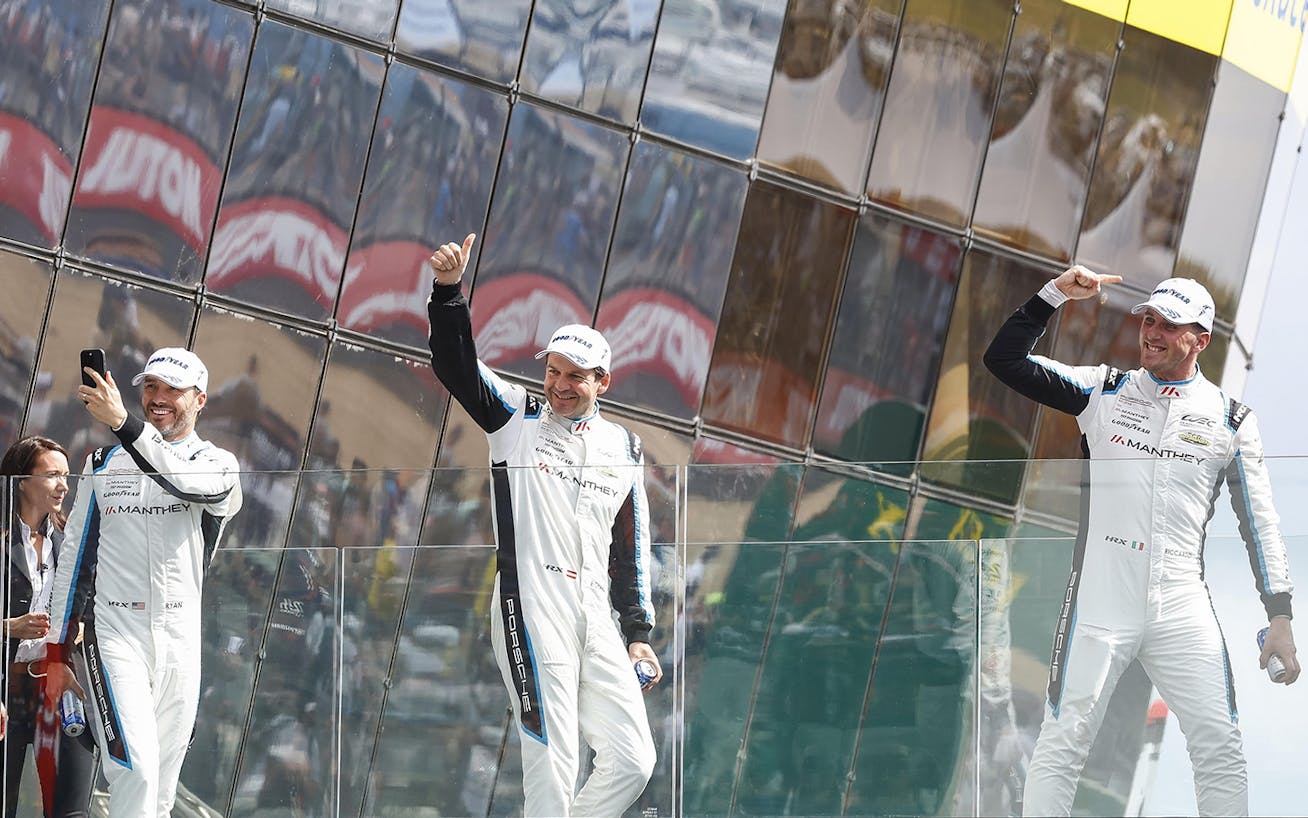
The smell. The noise. The speed. This holy trinity of motorsport has been experienced by competitors, teams and fans alike at the Circuit de la Sarthe – home to the world’s greatest endurance race, the 24 Hours of Le Mans, for over 100 years. You will sense it at its most evocative at places like Tertre Rouge – the Red Hill – the highest point of the circuit. “You drive through a fragrant cloud here,” explains Richard Lietz, the Porsche works driver who is one of endurance racing’s most successful pilots. “You smell the fans barbecuing nearby. You think about food. But you shouldn’t, because you don’t have time for it. This section is one of the most important on the entire track.”Richard does indeed have a good nose… especially for sniffing out victories at Le Mans. The Austrian has celebrated class wins six times since his first in 2007 driving a 997 GT3 RSR in the GT2 class. In 2025, along with teammates Ryan Hardwick and Riccardo Pera, the Austrian won the LMGT3 category in the FIA World Endurance Championship driving a Porsche 963 race car. Who better, then, to introduce us to the secrets of this legendary circuit.The start at the 1969 24 Hours of Le Mans. Three Porsche cars initially lead the way: the #14 917 LH car driven by Rolf Stommelen, Vic Elford’s #12 917 LH (partially hidden behind Stommelen’s) and the #20 908/02 LH piloted by Jo Siffert Photo: Getty ImagesDriving in the 24 Hours of Le Mans is a bit like life itself – it starts with the screaming, as several dozen highly-developed race cars suddenly loudly come to life. Then comes the time of learning, followed by restlessness, as the drivers fiercely fight for their place in the race, before a certain routine sets in. Bearing the experiences they’ve encountered throughout their long journey, they then head towards the finish line.Hitting top speed at the 24 Hours of Le MansDrivers at Le Mans experience the race strapped into their cockpits, but freer than ever. Squeezed into the tight confines of their car’s cabin, the world flies past at speeds of over 250 km/h (155 mph). All along the course, the spectators are emotionally involved – encouraging, cheering, celebrating. Meanwhile, their heroes behind the wheels – alone but highly focused – spend hour after hour navigating this historic track from daylight to night-time then back to daylight again. Thrillingly alive yet at the same time always on the cusp of peril. And a big part of the story is the venue itself – a World Heritage Site for sports, according to National Geographic.In 1970, the #23 Porsche 917 K race car in Salzburg livery, driven by Richard Attwood and Hans Hermann, became the first Porsche to claim overall victory at the 24 Hours of Le Mans Photo: Porsche“Very early on, Le Mans became the place where manufacturers wanted to prove their skills and where their technology had to prove itself,” explains Richard. “Everything comes together here – tradition, 200,000 highly knowledgeable and idiosyncratic fans who camp next to the track, and that special French charm.” Lietz is fully aware of the history of this place – not least because he heard all about it when he was taking his first, tentative steps in motorsport. Erich Glavitza, his first mentor, was one of Steve McQueen’s stuntmen in the cult 1971 film, Le Mans. Richard’s lessons were embellished with anecdotes from Erich about the great Hollywood actor and the film, which was shot in 1970. Richard has created many memories of his own at Le Mans during his stellar career.Richard Lietz’s guide to driving a lap at the 24 Hours of Le Mans“The thrill begins at the starting grid, with all the rituals,” says Richard, as he guides us through the challenges and sensations of a lap of the Circuit de La Sarthe. “For me it’s always like coming home. You meet long-time companions, like Porsche legend Norbert Singer. Whenever we see each other, we laugh and say – so, we’re home again!”Racing at the 24 Hours of Le Mans requires intense and comprehensive preparation (“It actually begins the year before with the cool-down lap,” says Richard). Le Mans has long been a marathon race with a sprint race hidden in each lap. From the off there are potential pitfalls, beginning with the first corner of the first lap. “The Dunlop Curve is difficult to drive at any point in the race – but especially at the start,” says Richard. “There is frequently contact and quite a few people get stuck here in the large bed of gravel on the left of the track. And then their race is already over.”But if you get through it, Tertre Rouge awaits. For Lietz, it is one of the most important of the 38 corners on the 13.629-km (around 8.5 miles) circuit. “Here you have to put your foot down as early as possible because the long straight comes after it,” Richard continues. “It’s also a corner where you gain a lot of time with cuts if you drive over the kerb on the inside and outside.” However, that’s only possible, he adds, if the car and the chassis allow it and you go over it without impacting the balance too much. “But if you manage it, you’ll be doing it for 24 hours,” adds Richard.Then, as quickly as possible, it’s onto an “unspectacular but very important passage”, as Richard describes it – the long straight. Le Mans is a high-speed track, so it’s extremely important to be on-point throughout this section. “(You have to be competitive for) the entire race, because it’s a risk-free way of gaining time. Everyone here obviously tries to have a low downforce package. But you mustn’t forget that you still have to have a car that is stable under braking or in the corners themselves.”Richard Lietz is one of the most successful of all the current drivers competing in endurance racing. As of 2025, he’s been victorious six times at the 24 Hours of Le Mans in various classes Photo: PorscheChicanes and the famous Mulsanne StraightA simple formula applies for the chicanes that follow, Richard continues: “Brake late, accelerate early, drive through quickly – relatively simple.” What would it be like without these chicanes – which were introduced after a fatal crash involving his fellow countryman, Jo Gartner, in 1986 – when the Hunaudières Straight was still a straight line? “Without chicanes, it would be brutal,” says Richard. “The top cars would come through here at 400 km/h [almost 250 mph] and the crumple zone is as long as your feet.” Richard has a lot of respect for the generations of drivers who drove here before these chicanes were built. “It was certainly crazy and a completely different time,” he says. “But we also come through here quickly [in GT race cars] and because the cars have such similar performance, we really have to push ourselves to the limit. And brake late before the Mulsanne Corner – only after turning in.” It’s a high-risk game. “It’s difficult,” continues Richard. “The brakes cool down a bit on the straights. And at the first moment of braking, the tyre may not be up to temperature yet.” The 2022 24 Hours of Le Mans race was decided here because the sister 911 RSR of Richard’s Porsche GT Team – driven by Michael Christensen, Kévin Estre and Laurens Vanthoor – saw their front right tyre suffer a blow-out causing them to lose valuable time. The Mulsanne remains a trap.Negotiating Indianapolis: one of the most challenging sections at Le MansOur lap with Richard continues. “Then comes one of the most beautiful sections – the Indianapolis Corner. This is an extremely fast right-hand bend before a banked curve to the left. This whole Indianapolis-Arnage section is a considerable challenge and one of those sections where you have to be fully focused. You never arrive here and think: ‘easy’. There are places at Le Mans where you can relax a little. This isn’t one of them. “It’s a high-speed corner where you can enter quickly, but then you have to brake right away at the exit for the upcoming left-hander. It has a slight banking, so you can get through it very quickly.” At least that’s how it should ideally be done. “Arnage is then taken in first gear – a hairpin bend, rather unspectacular,” Richard adds.In 1971, one of the greatest motorsport movies of all time was released: Le Mans. Starring Hollywood legend, Steve McQueen (pictured right) – an accomplished race driver in his own right – race footage was filmed at the 1970 24 Hours of Le Mans. In the movie McQueen (pictured here talking to the film’s director, John Sturges), drove a Porsche 917 K Photo: Solar/Cinema Center/Kobal/ShutterstockIn the lead-up to the race, drivers go to sleep each night and think “How can I push the limits here without losing much time?”. Time to talk about the Porsche Corners – one of the best combinations in motorsport as well as one of the most challenging. “You take the entry in fifth gear, the next left you then drive at full throttle, the left corner after that at almost full throttle, and then in fourth gear and out of the Karting section,” explains Richard. “The whole section is very fast and right against the wall, so you can’t afford to make any mistakes.”It’s not for beginners, says Richard. “This really is one of the most difficult spots for drivers who are still finding their feet. It takes you a long time to become competitive here. There’s a high risk of ruining the car.”The importance of setting routines at the 24 Hours of Le MansAfter 19 consecutive starts at the 24 Hours of Le Mans (up to and including the 2025 edition), Richard has developed set routines here. “I know what I have to do to slowly find the limit,” he says. “But a young driver who wants to prove themself right away has to push themself to the limit early on.” Richard (centre, giving a thumbs up), on the podium with co-drivers Ryan Hardwick (left) and Riccardo Pera, after winning the LMGT3 class at the 2025 24 Hours of Le Mans in a Porsche 911 GT3 R racing for Manthey 1st Phorm Photo: PorscheOne challenge for new drivers is that apart from the 24 Hours of Le Mans, other races are rarely held here and the route changes a lot over the course of race week, with normal traffic using sections of it. It takes time to get the necessary grip, so patience is key. The thing that makes entering the Porsche Corners so difficult is the fact that there are bumps there and the car is unstable and, says Richard, “that’s exactly the moment when you want to pick up speed again”. “If you want to stay away from the limit, you brake right on the bump, which means you will enter the corner with an unstable car,” he says. “And if you enter the corner with an unstable rear, the problem will extend through the entire section.“You now have to muster even more courage to brake later to get rid of this unstable rear end – so the worse your positioning is, the later you should brake.”This sounds paradoxical – all just to ensure that you enter the corner well and can give full throttle in the next left-hand corners and keep up speed – but then racing at Le Mans is not always logical. There’s an often-delivered statement about this magical circuit and the race held on it: “You don’t win Le Mans. Le Mans lets you win.”
Find your Porsche Track Experience now
Find out more
Continue reading
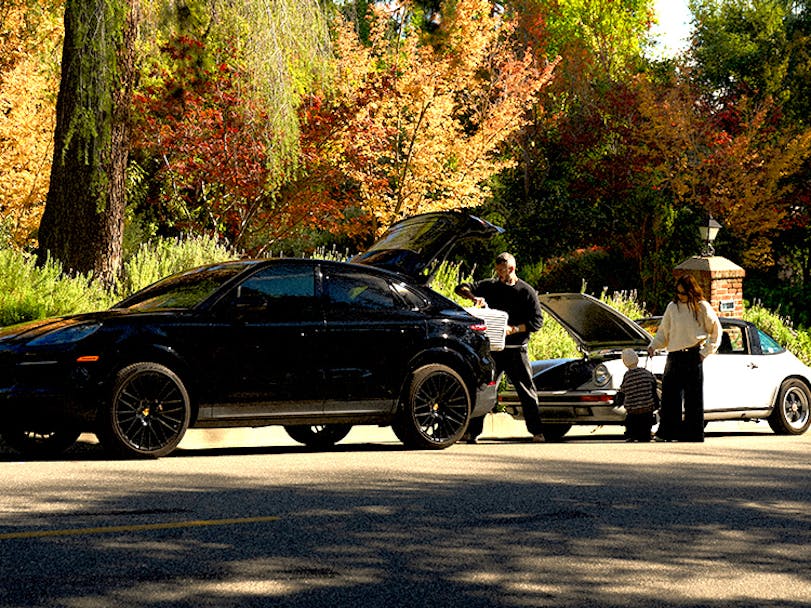
Is this the perfect two-car Porsche garage?
With over 7.5m Instagram followers, fashion influencer, Julie Sariñana – aka Sincerely Jules – knows plenty about style. She tells us how her classic 911 Targa and Cayenne coupé turns heads and how they’re the perfect Porsche combo for her busy lifestyle
Read more
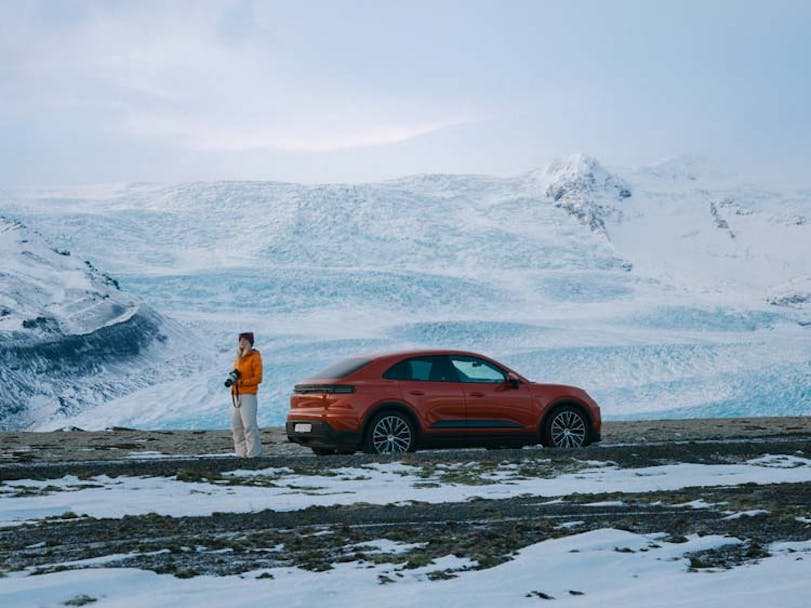
A local photographer’s guide to Iceland’s magical south coast on a Porsche road trip
From glaciers to black beaches, Icelandic photographer Ása shares her must-visit places on Iceland’s south coast on a Porsche road trip in a Macan Electric
Read more
Become a better driver with Porsche Track Experience Master Training
As multiple Porsche owners, the Bügelmayers want to find out how they can push the limits of their driving capabilities. Luckily, regular visits to the Nürburgring provides the answer
Read more


![Couple stand in front of red Porsche 911 GT3 at the Porsche Track Experience at the Nürburgring [credits Photo: Porsche]](https://content-hub.imgix.net/4tynqINDcjS0mHZdXn45SU/f03804a40e4a2724fd227d8f87e55ab5/Bruegelmaier_Thumbnail_Image.jpg?w=811)